Glenview Epoxy Flooring takes on epoxy flooring in Bensenville with more than 20 years of slab work behind it, and some of the most particular floors we plan here belong to air freight. In a hall where aircraft pallets and containers are assembled, the cargo is not supposed to rest on the coating at all. The floor is the ground around the equipment that carries the load, and its job is to stay organized, readable and clean.
That changes what a good floor means. Instead of asking how much weight a coating can take under a pallet, we ask where the storage spots and travel lanes belong, how the coating meets the transfer equipment, and how easily a crew can sweep debris away before it ends up under something that matters.
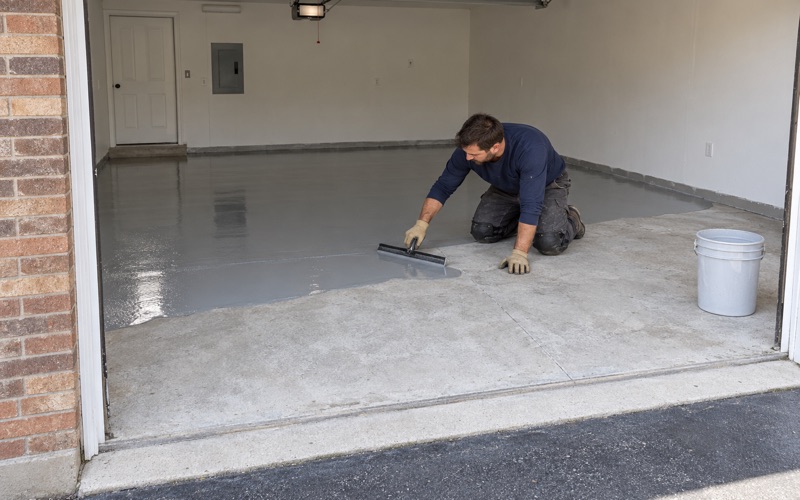
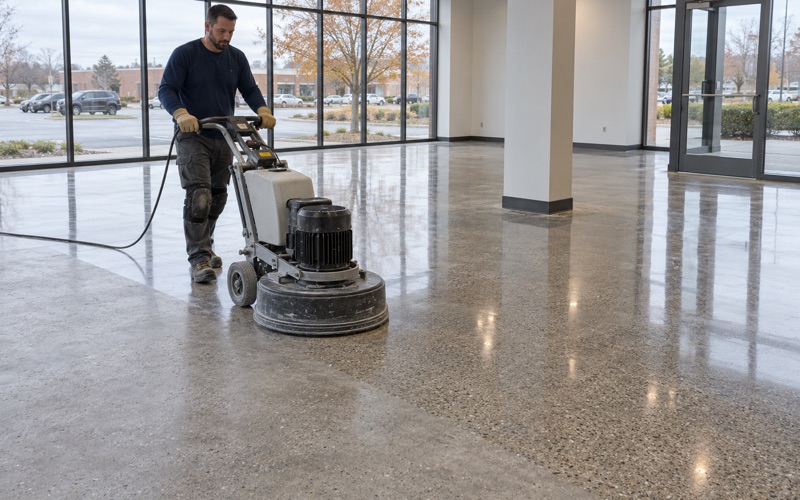
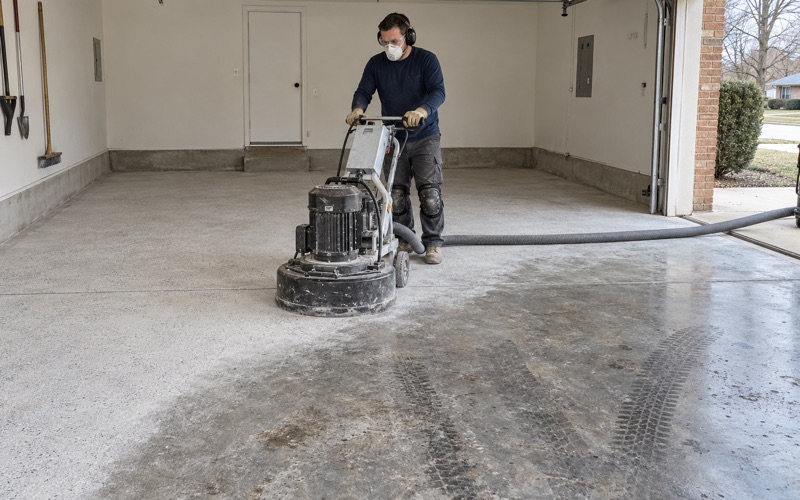
The groundwork underneath does not change from one building to the next. We profile every slab by diamond grinding or shot blasting rather than acid etching, and we put a moisture test into the written scope before the price is settled. The proposal then states the product line, the coat count and the finished thickness, so a facility manager can measure the installed floor against the paper.
An Air-Cargo Build-Up Station on Foster Avenue
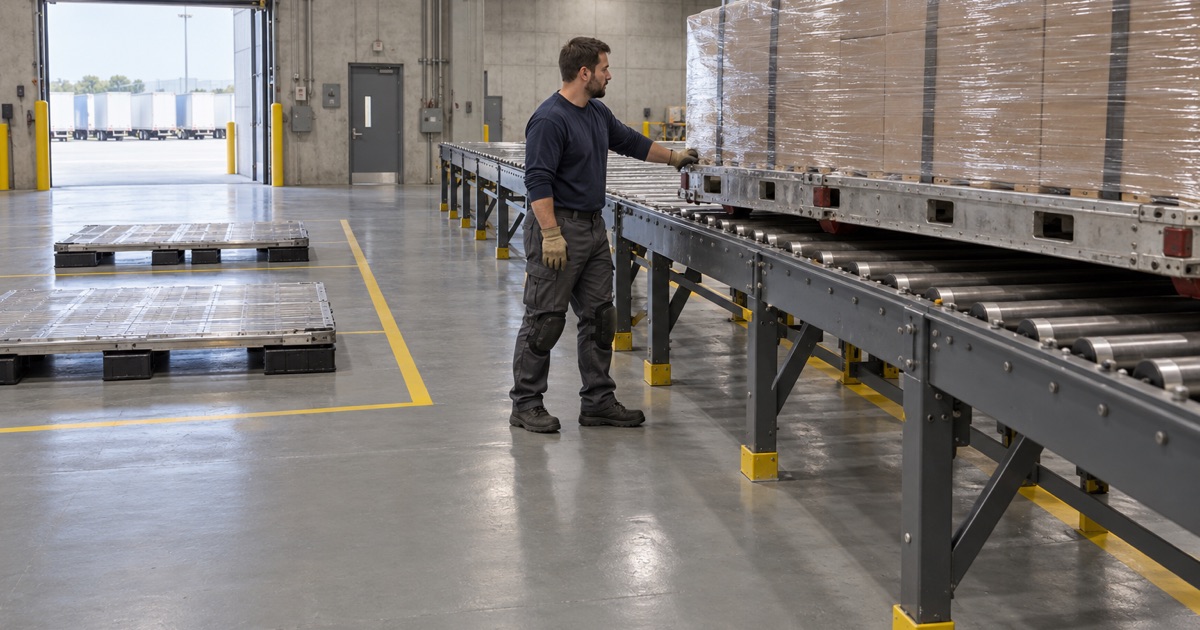
Bensenville borders the southwest corner of O’Hare International Airport and holds one of the largest industrial parks in Illinois, so freight handling is part of the village’s working floor stock. One operator shows the kind of building we have in mind better than any general description could.
Global CFS and the bonded container freight station
Global CFS lists its address as 860 Foster Avenue, which sits inside the village in Addison Township, DuPage County. The company says it operates four bonded container freight stations that are open 24/7/365, and that in 2009 it was enrolled as one of TSA’s first Certified Cargo Screening Facilities. Its own description adds that after screening it can provide cargo build-up and ULD work.
We want to be plain about the limits of that example. We have no relationship with Global CFS, we have not seen its floors, and the company does not say which of its four stations handles ULD build-up. We use it because it shows that an off-airport freight station doing this work exists in Bensenville, not because we know what any of its rooms look like.
What a ULD is
A unit load device, or ULD, is the aircraft pallet or container that goes into a plane’s hold. Cargo is built up onto it on the ground, netted or strapped, and moved out to the aircraft as one unit. The pallet bases are flat aluminum, and the containers are shaped to fit the curve of the hold.
Why a ULD is not meant to sit on the slab
Industry handling guidance from the ULD CARE campaign is direct about this. Built-up ULDs are moved and stored on dollies or racking equipped with rollers or ball mats, an empty ULD goes onto a level roller deck or ball mat, and spacers go underneath any container placed at ground level. A companion ULD CARE article notes that most ULDs are designed to be supported on a transfer surface such as rollers or ball mats.
For a floor contractor, that guidance moves the coating’s role. It is not the bearing surface under the pallet base. It is the surface everything else crosses: people, dollies, tow equipment, and every scrap of debris that falls during a build.
Looking for epoxy-flooring closer to Franklin Park? See Franklin Park Epoxy-Flooring.
Roller Decks, Ball Mats, Dollies and Spacers: Coating the Floor Around Them
In a build-up hall the transfer equipment does the work of holding cargo level and moving it. Our part is a floor that fits around that equipment cleanly and is easy to keep that way.
Planning the coating around floor-level transfer decks
Roller decks and ball mats that sit at floor level are either set in place or anchored, and the coating has to be planned around them before the first pass with the grinder. Where a deck is coming out for the work, we coat the full field and leave the anchor positions to be redrilled through a cured floor. Where a deck stays, the coating terminates cleanly at its footprint, with an edge that does not lift or catch debris.
Leveling the deck is the deck’s own job. Its hardware sets the rolling plane, and we do not promise a coating that corrects a slab for the equipment. What we do promise is a floor around it that is sound, sealed and free of the low spots where grit collects.
Preparation that does not leave dust behind
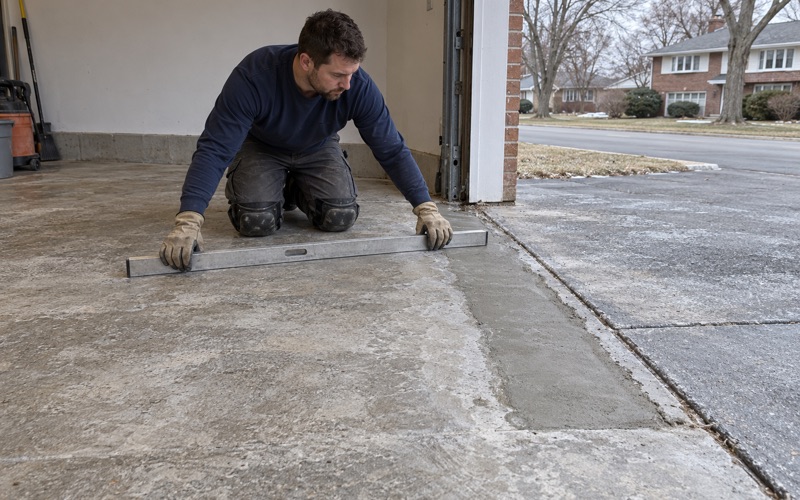
A freight building rarely empties completely, so dust control is part of the scope. Grinding dust is captured at the machine by vacuum, never rinsed toward a floor drain or out a door. Before any profiling, we map cracks, spalls and old coatings, and when a section of slab needs repair or replacement before it should be coated, we say so in writing.
Dollies, tow equipment and the right system
Dolly traffic is steady and repetitive, so the system has to hold up to rolling wear and the occasional dragged strap or dropped tool. In most freight halls that points to a 100% solids epoxy base with a polyaspartic or polyurea topcoat, chosen within the Illinois VOC limits for floor and industrial coatings. The proposal names the exact product line so nobody has to guess what went down.
Designated ULD Storage and Dolly Lanes as Zones in the Coating
The ULD CARE guidance also asks that ULDs be stored temporarily in a designated area, safe from damage by vehicles and ground support equipment. A floor coating is one of the simplest ways to make that designation permanent and visible.
Storage spots and lanes built into the system
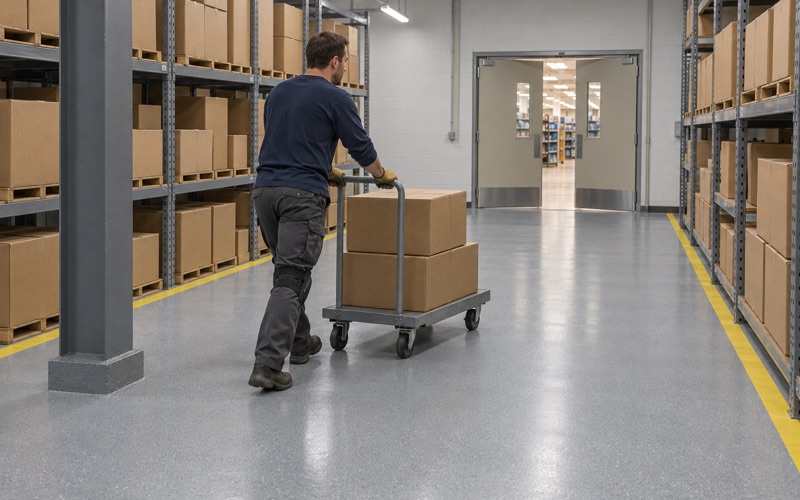
We lay out ULD storage spots, dolly lanes and walkways as color zones installed within the coating build, not as paint rolled on afterward. A zone that is part of the system wears with the floor instead of flaking off in the first busy month. Crews then read the floor at a glance: where a built-up unit waits, where a dolly runs, and where nobody should park a tug.
Screening and build-up as separate areas
A station that screens cargo before build-up has distinct work areas, and the floor can mark each one. Screening, build-up stations, ULD storage and the lanes between them each get their own color and boundary. The facility decides the layout; we translate it into the coating so the plan holds up long after the tape lines would have worn away.
Working around a building that never closes
An operation open 24/7/365 cannot hand over the whole floor at once. We phase the job zone by zone, using overnight and weekend windows where traffic is lightest, and fence off each section until it has cured enough to carry dollies again.
Cure follows the slab, not the calendar. Some resin product data sheets call for a minimum substrate temperature of 50 degrees F and a slab at least 5 degrees F above the dew point, and a freight hall with its doors cycling open in January can fall short of that. We measure slab temperature and dew point at the surface, and when a zone is too cold, we heat it or wait.
Keeping Strap Ends, Net Hooks and Grit Out From Under a Pallet Base
A build-up floor collects a particular kind of debris. Strap ends, net hooks, cut banding, scraps of the plastic sheeting laid on a ULD base before loading, and grit carried in on truck tires all land on the floor during a shift.
Why debris on a build-up floor matters
On a warehouse floor, a stray piece of banding is a housekeeping issue. In a build-up hall it can end up under an aluminum pallet base or wedged in a transfer roller, which is exactly the contact ULD handling practice is trying to avoid. The floor cannot prevent that by itself, but it can make the debris easy to see and easy to clear before a unit moves.
Federal workplace rules point the same way. OSHA’s walking-working surfaces rule asks that workroom floors be kept clean and, to the extent feasible, dry, and that walking-working surfaces be free of hazards such as sharp or protruding objects and spills. A seamless, sealed floor makes that standard easier to meet every shift.
Texture that sweeps clean
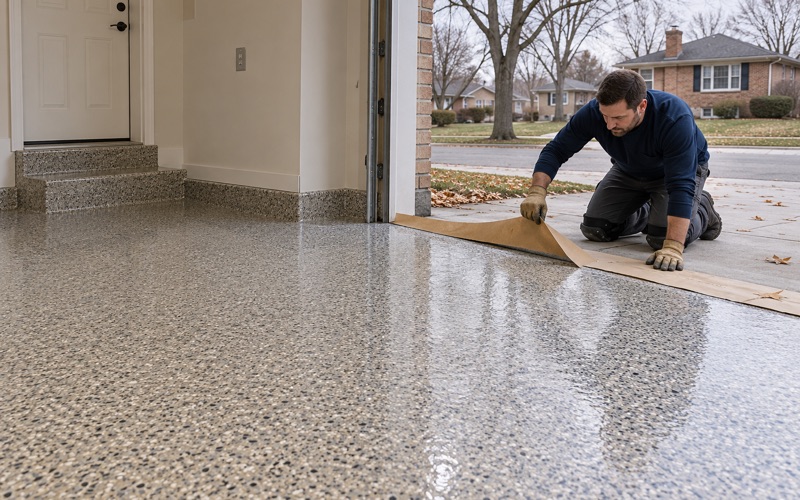
Slip resistance is set by the broadcast and topcoat we specify, not by a promise on a brochure. A coarse quartz aggregate broadcast grips well, but it also holds grit and snags fragments of banding, so we keep build-up stations and storage zones on a finer texture that a broom clears in one pass. Where the floor near a door sees snowmelt, we can step the texture up in that strip only.
Moisture, warranties and what we put in writing
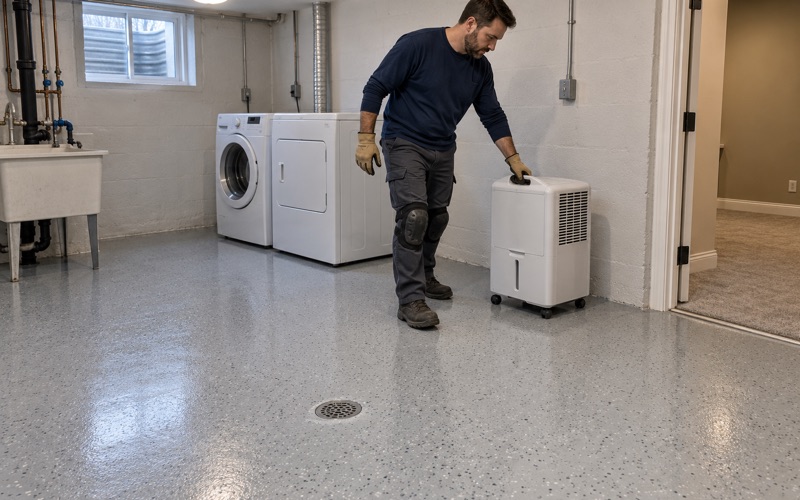
A slab that has carried freight for years can also carry moisture that no one has measured. Our written scope includes testing by ASTM F1869 calcium chloride or ASTM F2170 in-situ relative humidity probes before the price is final, and where readings call for it, the system starts with a moisture-mitigation primer.
We also explain what a coating warranty leaves out before the job is sold. Moisture vapor transmission and hydrostatic pressure are the first exclusions we name, and we would rather have that conversation at the proposal stage than after a floor in a working freight hall starts to lift.
- 20+ Years on Concrete
- Moisture Test in Every Scope
- Free Written Estimates