Glenview Epoxy Flooring has spent more than 20 years on epoxy flooring in Cary and the surrounding suburbs, and the jobs that teach us the most are the ones where a single room asks two different things of its slab. A space that cuts meat on one side and serves guests on the other cannot get by with one coating picked from a color chart. The floor under the cutting block has to shrug off fat, blood and scalding rinse water, while the floor under the bar stools has to look finished and feel comfortable underfoot.
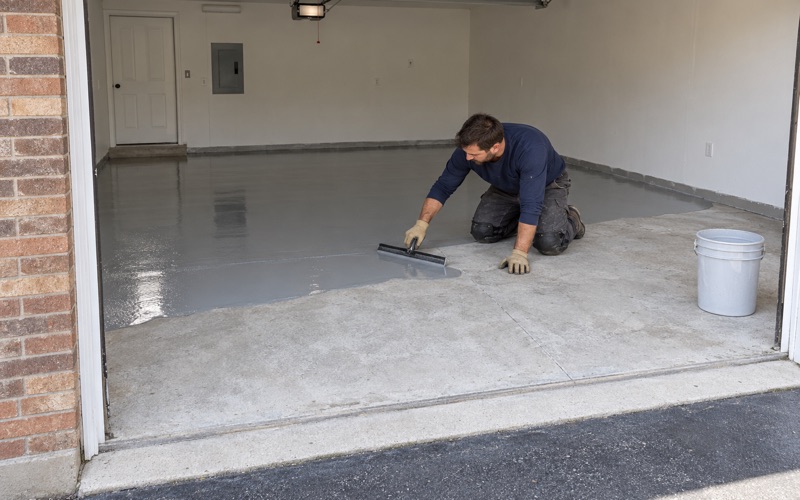
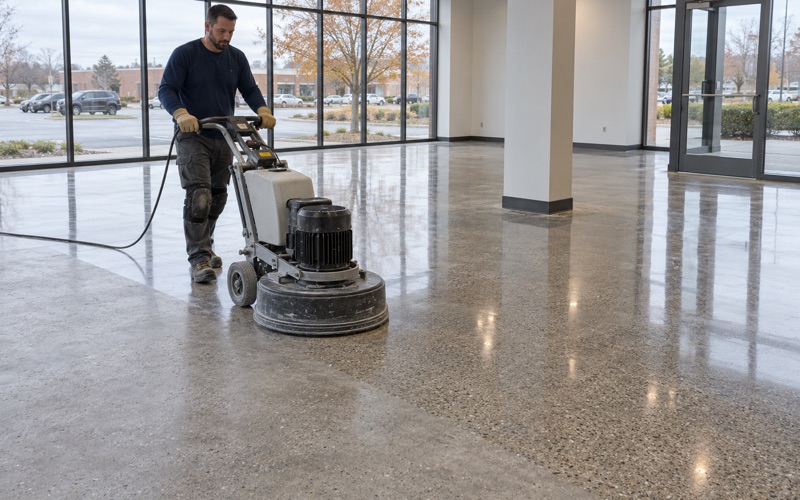
That split shapes how we scope food and drink floors. Every slab is opened with a diamond grinder or a shot blaster rather than acid, cracks and old coatings are mapped before we price anything, and the proposal names the product line, the coat count and the finished thickness. Then we draw a line on the plan where one system stops and the next one starts.
Homeowners get the same discipline on a garage or patio slab where a grill or smoker drips all summer. The chemistry that wears on a shop floor works on a backyard slab too, and it does not care whether the fat came off a band saw or a brisket.
A West Main Street Butcher Counter and the Chemistry Under It
Orchard Prime Meats at 133 W Main Street in downtown Cary is a good illustration of the kind of room we mean. A 2011 Patch article described it as established in 1983 and as a blend of a neighborhood wine bar, a tapas restaurant and a full-service butcher shop, with co-owner Rich Monfeli managing the butcher side. Current listings still place it at that address, open Mondays from 9:00 a.m. to 6:00 p.m. We have not worked there and have not seen its cutting room or its floors; it simply shows, in one storefront, the problem this page is about.
A word on the name: this is Cary, Illinois, the village in Algonquin Township, McHenry County, with a portion in Cuba Township in Lake County. Searches for Cary businesses and projects regularly surface Cary, North Carolina, and nothing about that town applies to a storefront here. Building permits for a Main Street interior sit with the Village of Cary, and fire questions go to the Cary Fire Protection District, which is its own district rather than a village department.
Why fat is harder on concrete than a stain suggests
Bare concrete is alkaline. The cement paste holds calcium hydroxide in its capillary pores, and when animal fat or cooking oil soaks in, that alkali reacts with the fatty acids in a process called saponification, the same reaction that makes soap. The products are a fatty acid salt and glycerin, and they form inside the pores rather than on the surface.
A 2017 paper in the Proceedings of the Japan Concrete Institute by Han, Han, Hwang and Baek describes cement-based materials being “collapsed by chemical expansion” when they react with fat or oil, with the strong alkali in the pores damaging the microstructure of the concrete. That work came from immersing mortar samples in a laboratory, not from measuring any floor in Cary. What it gives us is a direction rather than a schedule: fat that keeps reaching bare cement paste keeps working on it.
What we look for on an existing floor
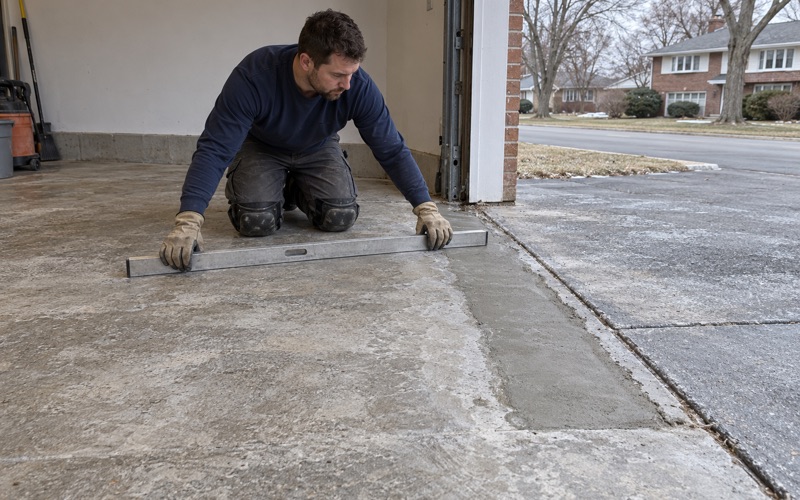
On a slab that has sat under a cutting counter for years, we expect dark, soft or crumbling patches where fat has soaked in. Those areas are mapped and ground back to sound concrete before the price is set, because a coating bonded to softened paste comes up with it. If the damage runs deep, we say plainly that the slab needs repair before it should carry any coating at all.
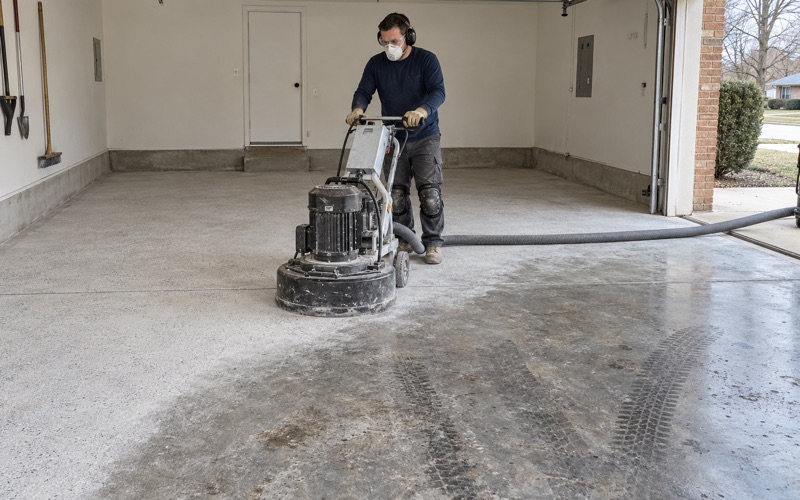
Fat-soaked concrete also resists bonding where it still feels hard. Degreasing alone rarely draws oil out of the pores, so the surface profile has to be cut below the contamination, which is one more reason an acid etch has no place on a food-prep floor.
Looking for epoxy-flooring closer to Bridgeview? See Epoxy-Flooring in Bridgeview.
The Cutting Side: Sealed, Seamless and Ready for Hot Water
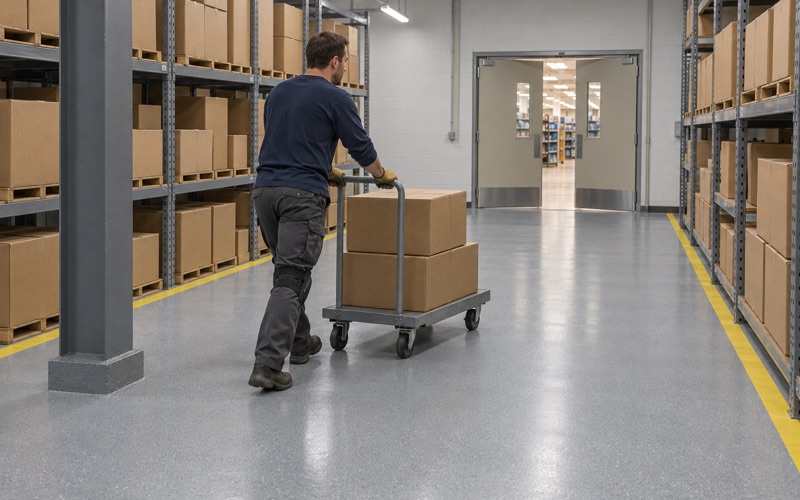
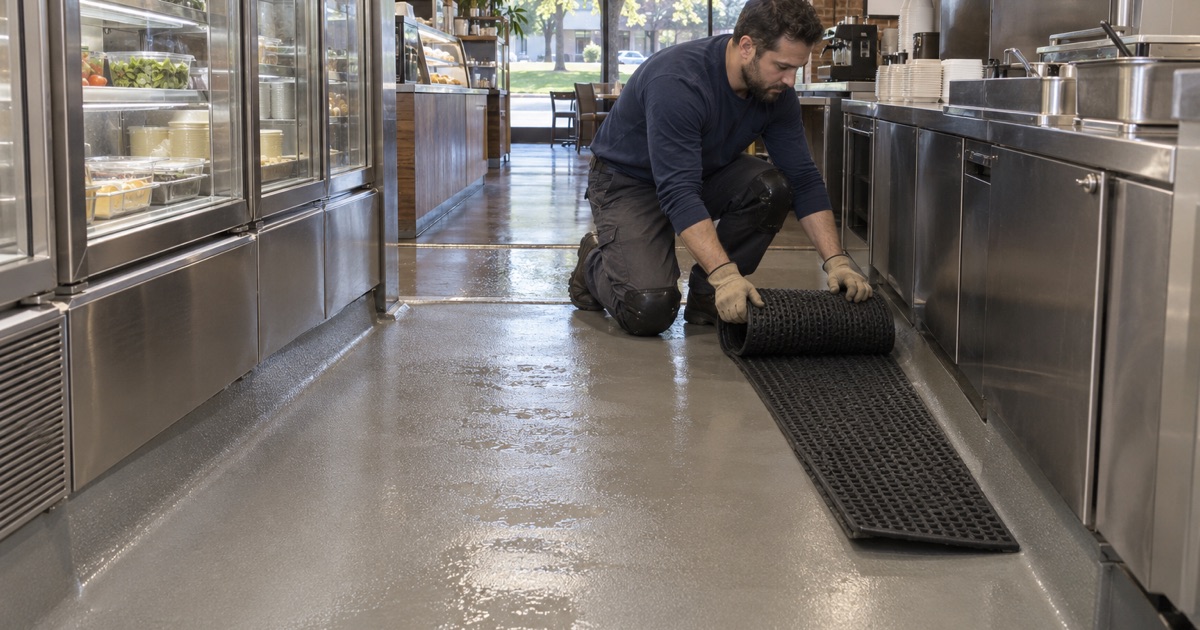
The goal behind a meat counter is a floor with no open concrete left to feed. That means a continuous, seamless system rather than a sealer that wears through in the traffic lanes, with wall junctures and the bases of fixed equipment closed off instead of left as raw edges.
Choosing the system
For a cutting area that sees scalding rinse water and daily degreaser, urethane cement is usually where our conversation starts. It handles the thermal shock of hot water better than a standard epoxy and is built for wet, fatty, heavily cleaned floors. Where the heat load is lighter, a 100% solids epoxy body coat under a chemical-resistant topcoat can do the work, and we spell out that trade-off in the proposal instead of hiding it behind a product name.
Texture, coves and the inspector’s call
A floor slick with fat is a slip hazard, so texture matters as much as chemistry. We specify slip resistance by the broadcast and topcoat used, typically a quartz aggregate broadcast locked in with a sealing coat, and we size it so the floor still comes clean with a deck brush and hot water. Too coarse and fat hides in the texture; too smooth and the floor turns treacherous the moment it is greasy.
The FDA Food Code, which health departments commonly build their rules on, carries an antislip exception for floors in wet areas (6-201.11) and calls for coved floor and wall junctures (6-201.13). We detail the cutting side with those references in mind. Whether a retail food floor passes is the county health department’s decision, not ours, and we never present a coating as approved by anyone.
Working around a shop that stays open
A butcher counter cannot close for a week. We phase the cutting area around trading hours, often in overnight or weekend windows, and capture grinding dust at the machine with a vacuum rather than washing it away. Cure times follow slab temperature and dew point, so the return-to-service date on the schedule is one we can defend.
The Bar Side: A Different Floor for Glasses and Guests
Where the room turns from counter to wine bar, the priorities change. The traffic is street shoes rather than rubber boots, the spills are wine and the occasional dropped glass, and guests are looking at the floor rather than working on it. A heavy butcher texture there reads as industrial and is hard on anyone sliding a stool.
Finish options for the guest side
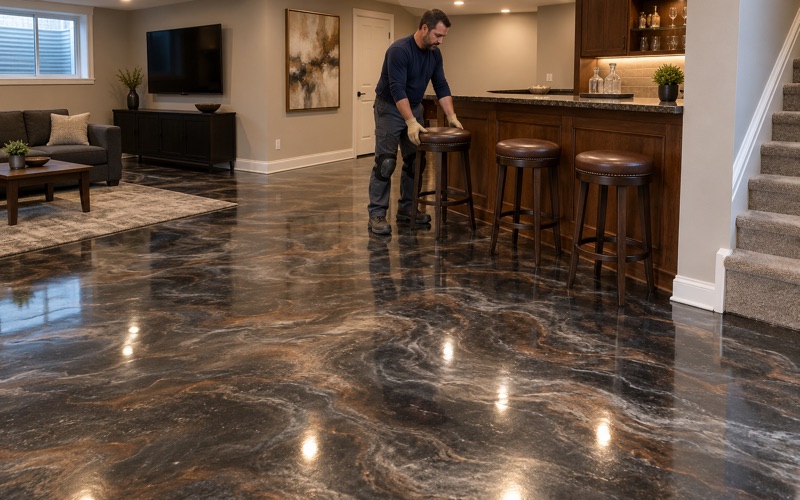
A smooth 100% solids epoxy under a polyaspartic topcoat gives a cleaner, more decorative look and wipes up red wine without staining. A vinyl flake broadcast adds color and hides minor scuffs, and a fine texture in the topcoat keeps the surface from going slick when a drink goes over. Where the existing slab is sound and the owner wants a concrete look, a ground floor treated with lithium silicate densifier is an honest option, though it will not resist stains the way a coated surface does.
Drawing the line between two floors
The boundary between the two systems needs a deliberate detail. We set it where the work zone actually ends, usually at a counter base or a change in use, and cut a clean termination into the slab so both edges are anchored rather than feathered out. Feathered edges lift first, and a lifted edge beside a butcher floor is exactly where fat finds its way back under a coating.
Moisture, warranty and the written scope
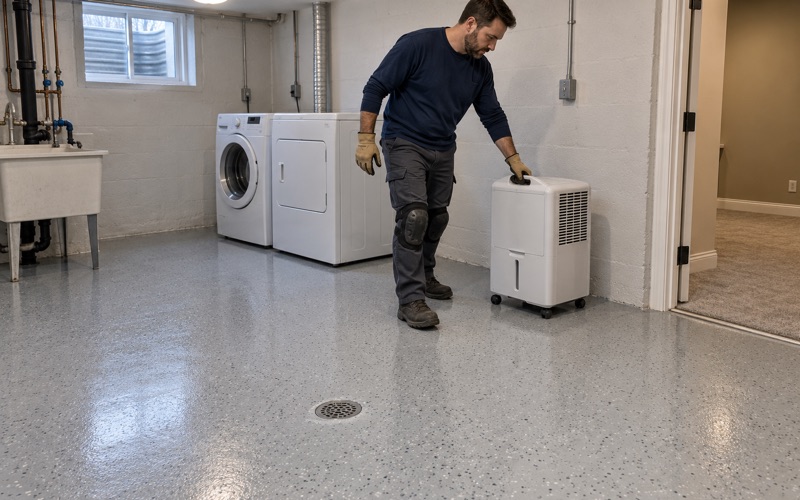
Both sides get a moisture test written into the scope before the price is final, using ASTM F2170 in-situ relative humidity probes or ASTM F1869 calcium chloride testing depending on the slab. Moisture vapor rising through the concrete is the first exclusion we name in any coating warranty, and we walk through the rest of what the warranty leaves out before the job is sold. The proposal lists each system separately, so the owner can check the cutting floor and the bar floor against the quote on their own.
Grease at Home: Grills, Smokers and the Garage or Patio Slab
The village counts 6,677 housing units, and 84.8 percent of occupied homes are owner-occupied, so the residential buyer is almost always the person who lives with the slab. The same fat chemistry turns up wherever someone cooks outdoors or parks a smoker in the garage between weekends.
Where residential grease does its damage
A smoker in the garage or a grill at the edge of a patio drips fat onto the same patch of bare concrete every time it runs. Over seasons those drip zones darken and can go soft at the surface, the same saponification at a smaller scale. Motor oil adds to it in a garage, and a slab that already holds oil will not take a coating until the contamination is ground out.
What we put down
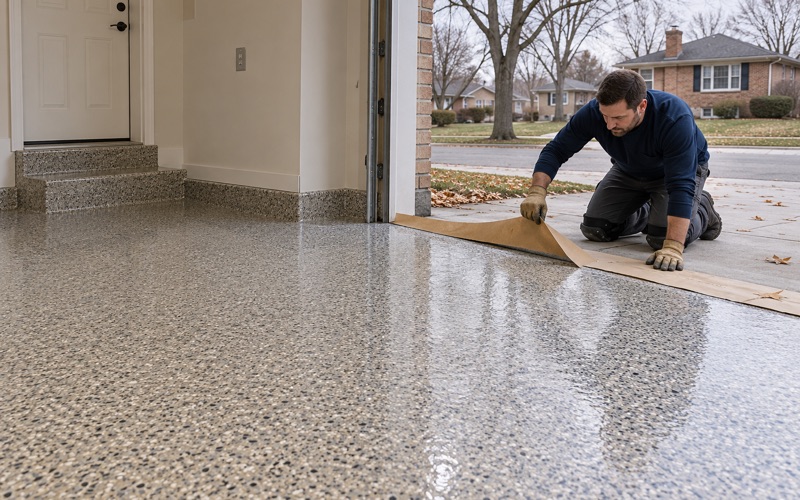
In a garage we typically build a 100% solids epoxy base with a vinyl flake broadcast and a polyaspartic topcoat, chosen to stand up to the brine and rock salt that ride in on tires every winter as well as the grease. Hot tire pickup is a real risk on thin systems, which is part of why the topcoat and finished thickness are named in writing. On an open patio, epoxy alone yellows in sunlight, so we lean on UV-stable polyaspartic topcoats or recommend a penetrating sealer where a full coating does not suit the slab.
Before any grinding starts
Cary’s homes went up steadily from the 1970s through the 2000s, so a forty-five-year-old slab and a twenty-year-old one can sit a few streets apart. We read each one for cracks, spalls and old coatings rather than assuming an age, and we say so when a slab needs repair first. Home jobs over the state threshold get a written contract and the Illinois “Home Repair: Know Your Consumer Rights” pamphlet before the grinder comes out, and an unheated garage in the depth of winter waits until slab temperature and dew point allow a proper cure.
- 20+ Years on Concrete
- Moisture Test in Every Scope
- Free Written Estimates