Glenview Epoxy Flooring has spent more than 20 years on epoxy flooring in Deerfield and the rest of the North Shore, and the floors that teach us the most are the ones that get wet with something other than water. Food and drink spills are ordinary. What they leave behind on bare concrete is not, and the difference shows up a few years later as a dull, pitted strip right where the staff stand.
This page is about one of those floors: the working strip behind a dessert counter, where milk, ice cream mix and syrup land all shift long. The same reasoning carries home to a kitchen, a basement bar or a garage with a second refrigerator in it.
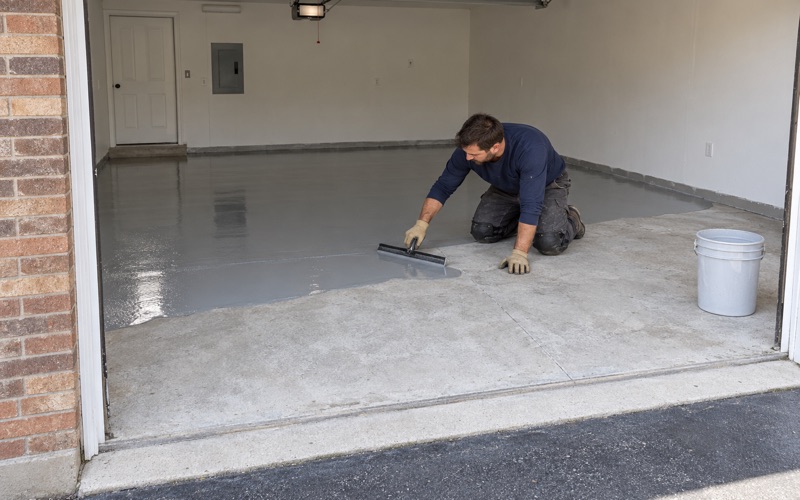
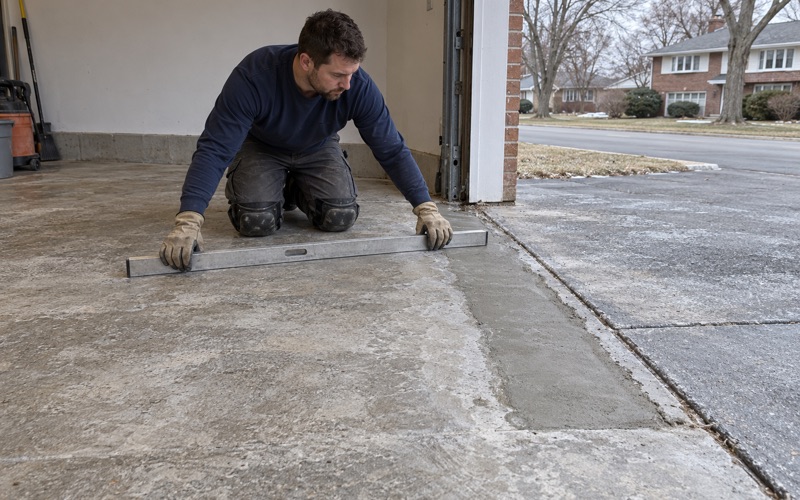
Every job starts the same way. We map the cracks, spalls and old coatings, run a moisture test as a written part of the scope, and open the slab mechanically before any resin goes down. If the slab needs repair or replacement first, we tell you so before you buy anything.
A Waukegan Road Scoop Shop and the Floor Behind the Counter
Scoops and Cookies sits at 740 Waukegan Road, Suite 108, a storefront the Census geocoder places inside the village in West Deerfield Township, Lake County. Its menu is natural ice cream, milkshakes and frappes, smoothies, hot chocolate, cookies and cookie dough. On Friday and Saturday it stays open until 10:00 p.m., and on the other days it runs into the evening as well.
We have never worked on that floor and have not seen it. We use the shop as a local example because its hours describe a pattern every scoop counter shares: long, busy evenings when the drips build up between one close and the next.
What lands behind the dipping cabinets
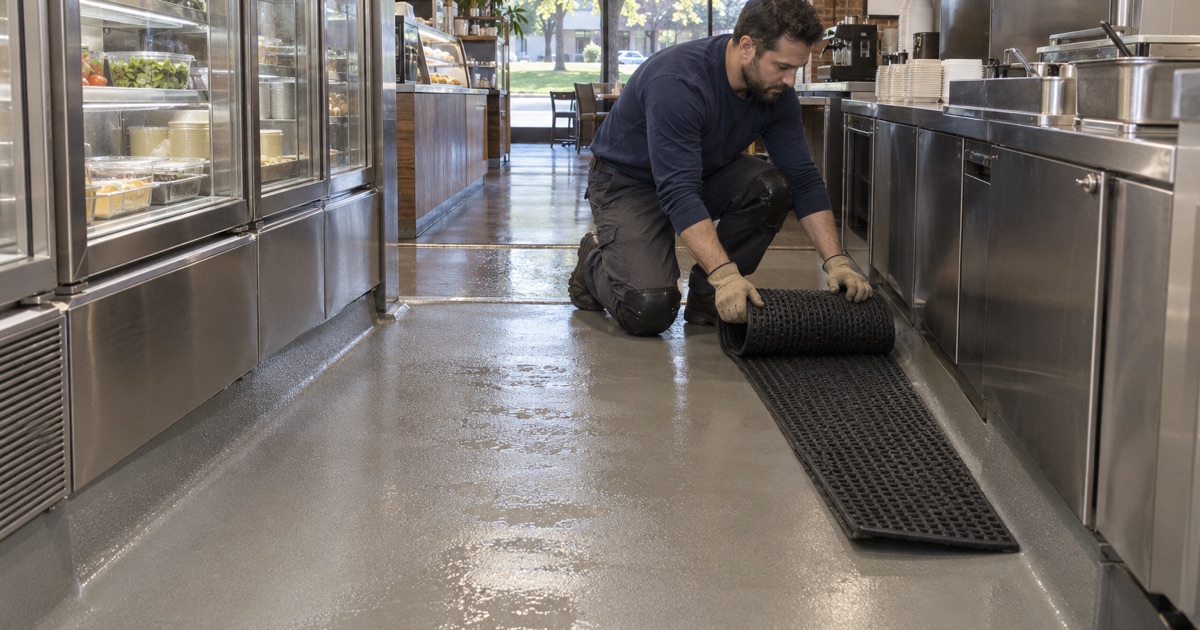
The customer side of a counter mostly sees foot traffic. The strip behind the dipping cabinets sees everything else. Melt runs off a scoop on the way to the cone, a shake spindle throws a spray of milk, and syrup drips from the pumps. A dropped pint ends up as a sticky smear tracked from the freezer to the register.
Why late hours change the picture
A spill wiped at two in the afternoon is a small event. A spill that sits under a mat through the last rush of a summer weekend, then gets a quick mop at closing, has hours to soak in. The longer the evening, the more of that time the floor spends wet with dairy rather than clean.
Looking for epoxy-flooring closer to Lincolnwood? See Epoxy-Flooring in Lincolnwood.
What Happens to Milk on Bare Concrete
Concrete looks solid, but a plain slab is porous. Liquids wick into the surface, and whatever they carry goes with them. Water dries back out. Milk does not leave so cleanly, because its sugars and proteins stay in the pores and begin to break down.
Milk sours into lactic acid
As milk spoils, bacteria turn its sugar into lactic acid. That is the souring you smell in a forgotten carton, and it happens just as readily in the top layer of a floor. A spill that seemed to wipe up fine can keep working in the pores, and the residue feeds the next round of souring when more milk lands on it.
Organic acids and the cement paste
The binder that holds a slab together, the cement paste, is alkaline, and acids attack it. Not all acids are equal. In a 2023 laboratory study published by AIJR, Ninan and colleagues immersed ordinary portland cement mortar in 10 percent solutions of four organic acids and found lactic and citric acid more aggressive than acetic and propionic acid.
That was a lab immersion, not a spill, and nobody has measured how fast a milk spill etches a shop floor. We do not put a timeline on it. What the study does show is that lactic acid sits near the top of the list of things a cement surface should not be asked to absorb over and over.
End-of-night cleanup on a sugary, milky floor
Closing staff know the routine: pull the mats, scrape the sticky patches, mop, rinse and squeegee. On bare or worn concrete that routine fights the floor. Sugar glazes into the open pores, the mop spreads a thin film of milk across a wider area, and the rinse water carries some of it deeper before the slab dries overnight.
On a sealed surface the same routine actually finishes. The residue sits on top, the scraper lifts it, and the rinse takes it to the edge instead of into the slab. A shift that ends at 10:00 p.m. should not need a heavier cleaner every month to get the floor back to clean.
Why a densifier or sealer alone falls short
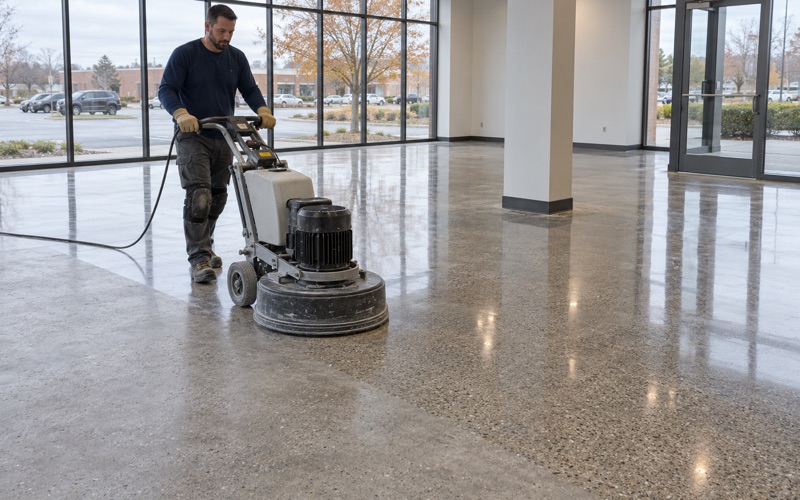
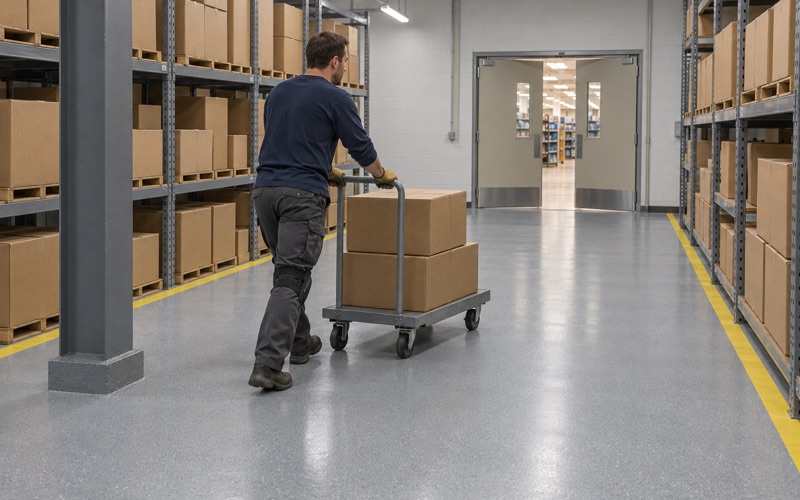
A lithium silicate densifier hardens the top of a slab and cuts dusting, which is why it suits a polished warehouse aisle. It does not put a film between the cement paste and an acid spill. Thin penetrating sealers wear off first in exactly the spots where staff stand and turn, so the strip that needs protection most loses it soonest.
Why Dairy Floors Are Written Differently
Coating manufacturers treat dairy as its own exposure category for exactly this reason. Flowcrete describes dairy floor coatings as needing to resist “corrosive dairy fats, lactic acids and proteins,” and lists spillage from “milk, brine and whey” as a slip and hygiene risk. That is plant-floor language, and a scoop shop is a retail counter, but the chemistry in the drip is the same.
Seamless, sealed and easy to rinse
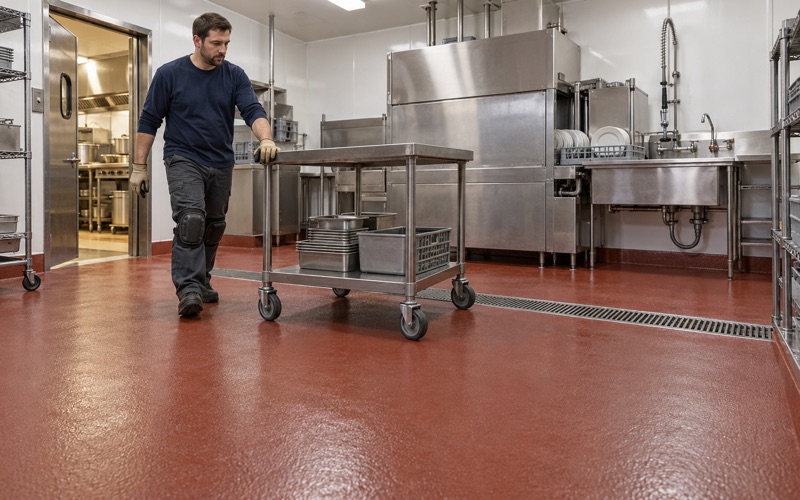
The goal behind a counter is a strip that holds nothing. A properly bonded resin floor has no pores for milk to wick into and no grout lines to collect it. A 100% solids epoxy base, or a urethane cement system where hot rinse water and cold freezer air meet, gives a surface that sheds the spill instead of drinking it. The finish coat is what the cleaner actually touches, so we match it to the products the staff use at closing.
Zoning the work strip and the customer floor
The two sides of a counter rarely need the same system. The staff strip takes constant wet spills, cleaners and a lot of standing in one place, while the customer floor mostly needs to look good and clean easily. We often specify a heavier, more chemical-resistant build behind the cabinets and a lighter decorative system out front, with a clean transition at the end of the counter.
Edges, toe kicks and the cabinet base
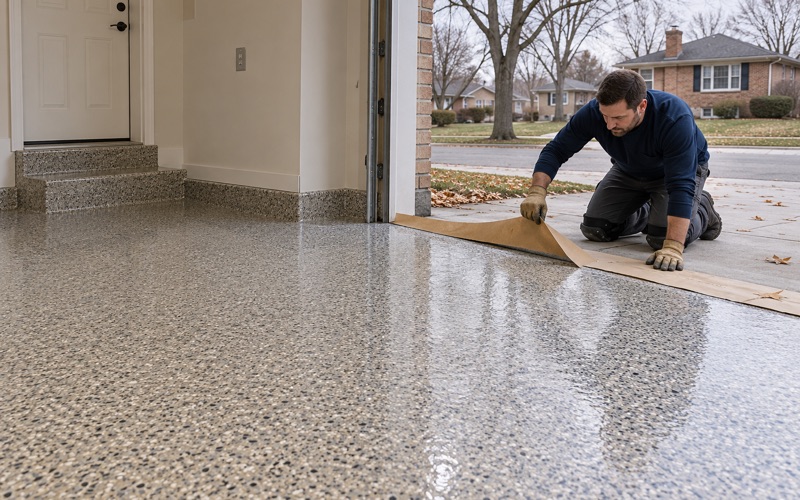
Milk does not stop at the middle of the floor. It runs under the dipping cabinets and collects along the wall, which is where a flat coating that ends at a hard corner leaves a seam. We carry the resin up the wall as a cove base where the layout allows, so the floor and wall meet in one continuous curve a mop can follow, and we seal around equipment feet rather than coating up to them and stopping.
Traction you can name
A floor covered in melted ice cream is a slip risk, and a gloss coat makes it worse. We set slip resistance by the broadcast and topcoat in the specification, typically a quartz aggregate broadcast locked in under the finish, so the texture is on the proposal instead of in a slogan. Too coarse a texture holds sugar and fights the mop, so the grit is chosen for both jobs. The proposal also names the product line, the number of coats and the finished thickness, so the floor can be checked against the quote.
Before any resin goes down
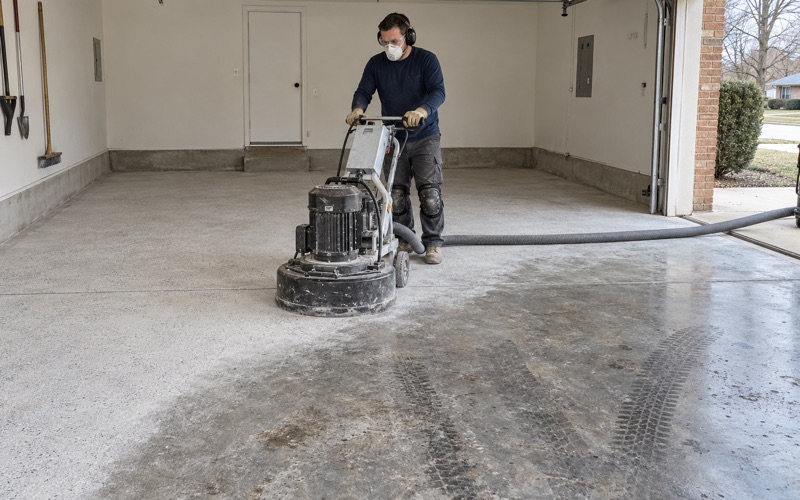
Every one of these floors is opened with a diamond grinder or a shot blaster to a measured ICRI concrete surface profile, never an acid etch, so the coating has something real to grip. On an old counter strip that has soaked up years of dairy, grinding is also how the contaminated top layer comes off. Dust is collected at the machine with a vacuum rather than washed toward a floor drain. Where a shop cannot close, the work is phased into overnight or weekend windows.
Sticky Shake Spills at Home: Kitchens, Basements and Garage Fridges
Most of our Deerfield calls are not shops. The village is mostly owner-occupied houses, a large share of them built in the 1950s and 1960s, with newer homes mixed in. Dairy and sugar find those floors too.
Kitchens and basement bars
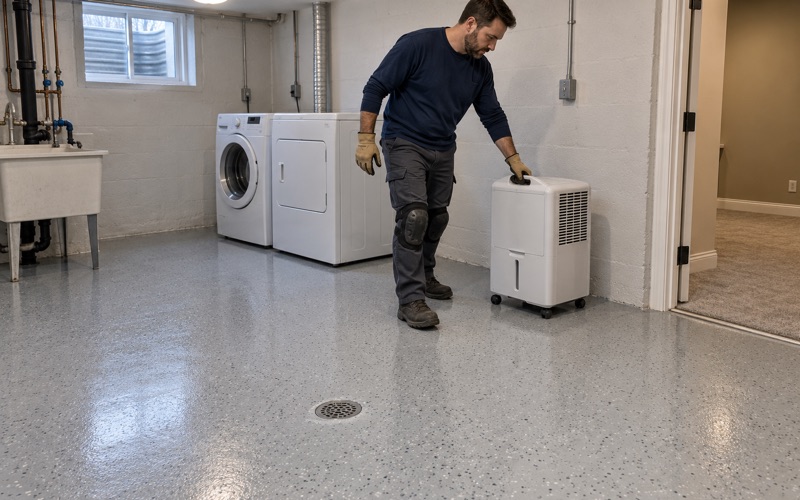
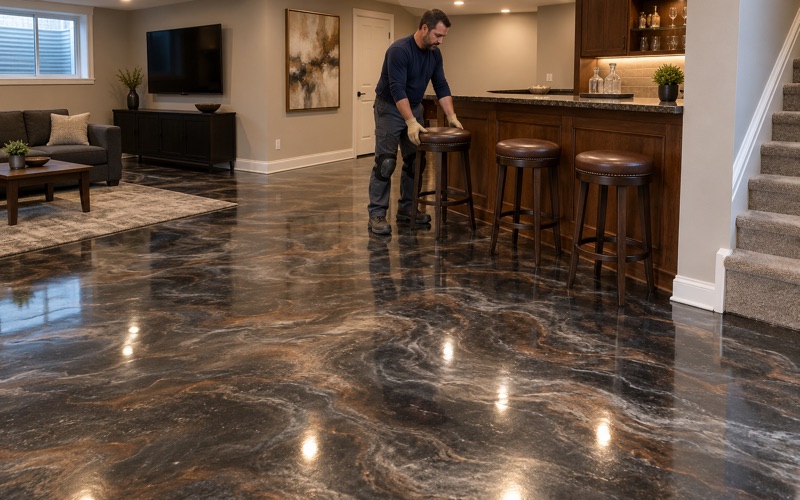
A basement with a bar sink, a freezer chest or a kids’ snack corner collects the same spills as a counter on a smaller scale. A coated floor there wipes clean, but the basement itself comes first. We read the slab for past water before quoting, because a coating does not stop sewer backup or seepage, and we test moisture with an ASTM F2170 relative humidity probe or an ASTM F1869 calcium chloride test as the job calls for.
The garage refrigerator
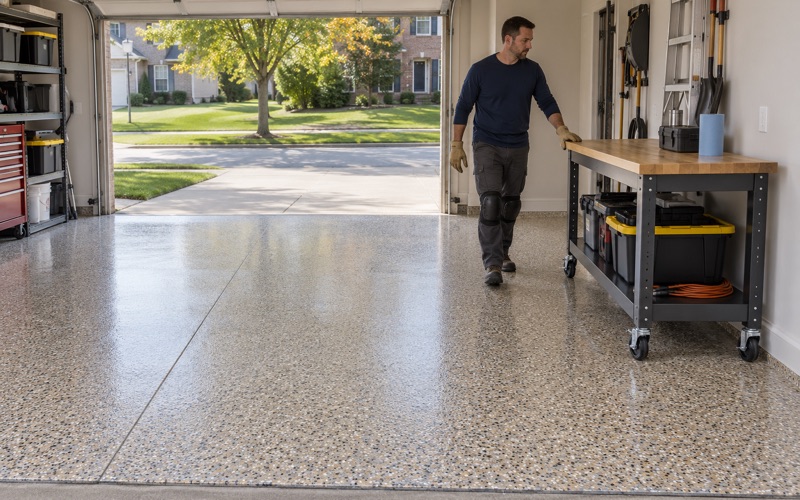
A second fridge or freezer in the garage is where the gallon of milk gets dropped and the ice cream for the party gets left out. A garage floor here also takes brine and rock salt all winter, so the system has to handle both. That usually means a sealed base and a polyaspartic topcoat that resists hot tire pickup and cleans up after a spill without staining.
What the warranty does and does not cover
We explain warranty exclusions before the job is sold, and moisture vapor transmission is the first one we name. Cure timing follows the slab temperature and the dew point spread at its surface, not the calendar, so an unheated garage in deep winter is told to wait. Home jobs over the Illinois threshold get a written contract and the Home Repair: Know Your Consumer Rights pamphlet before any grinding starts.
- 20+ Years on Concrete
- Moisture Test in Every Scope
- Free Written Estimates