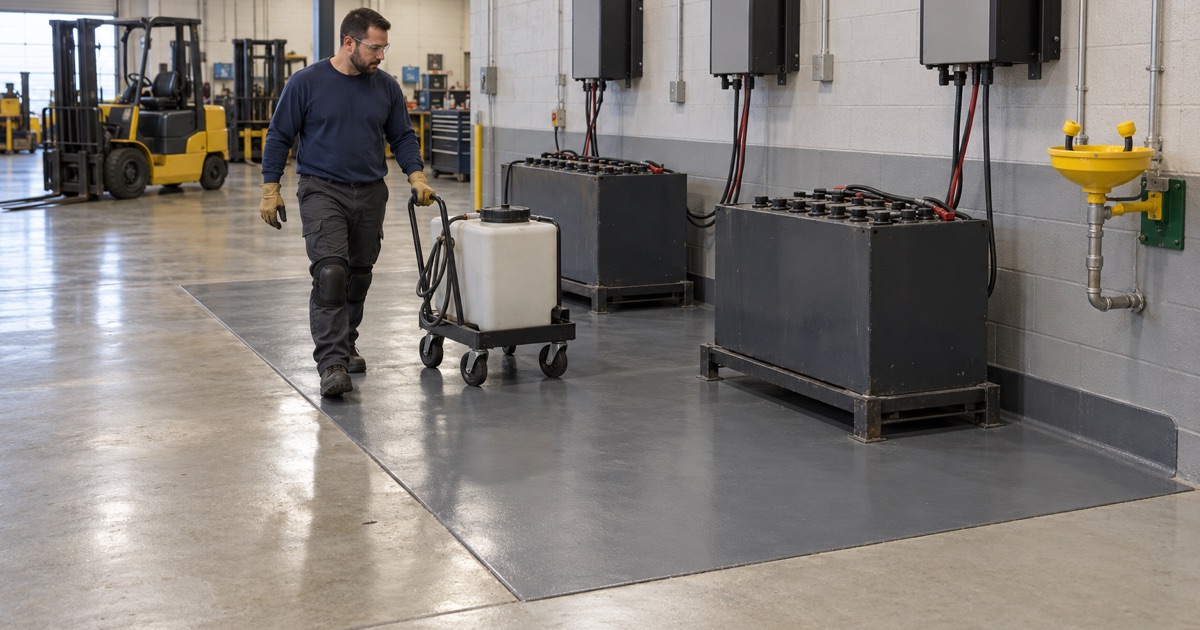
Glenview Epoxy Flooring brings more than 20 years of concrete coating work to epoxy flooring in Franklin Park, and the floors we plan most carefully here are the ones that see chemistry every shift. A forklift battery charging area is the clearest case: one patch of slab that gets dilute acid, then neutralizer, then rinse water, over and over. We coat that patch for what actually lands on it instead of running one system wall to wall.
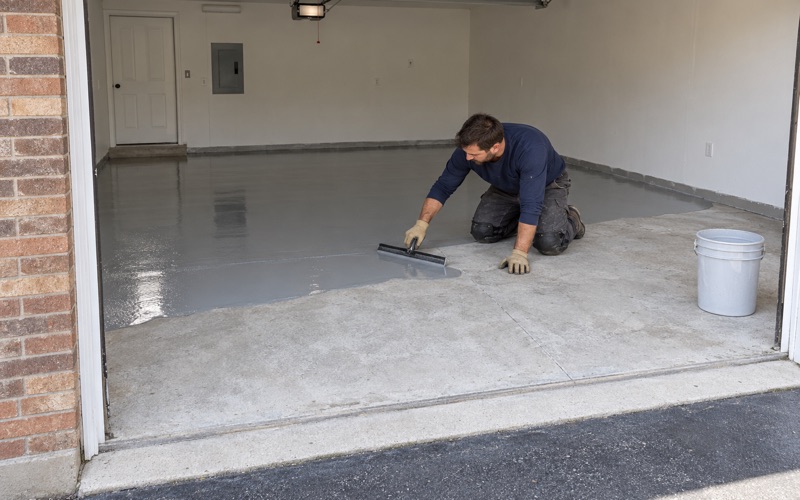
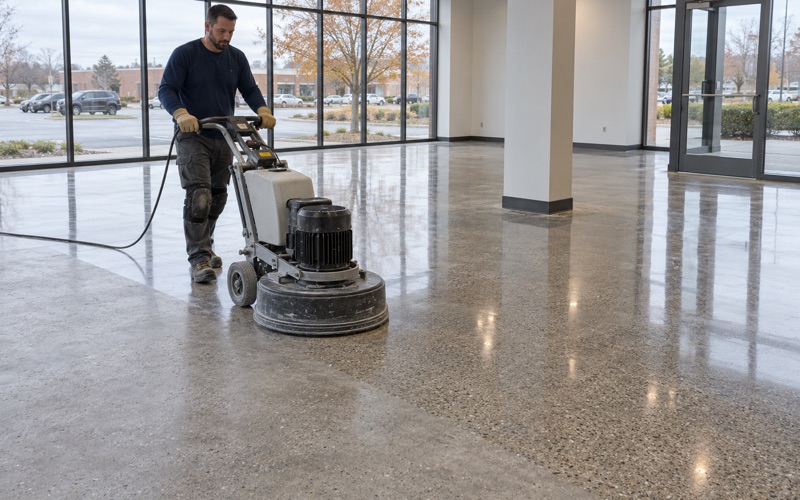
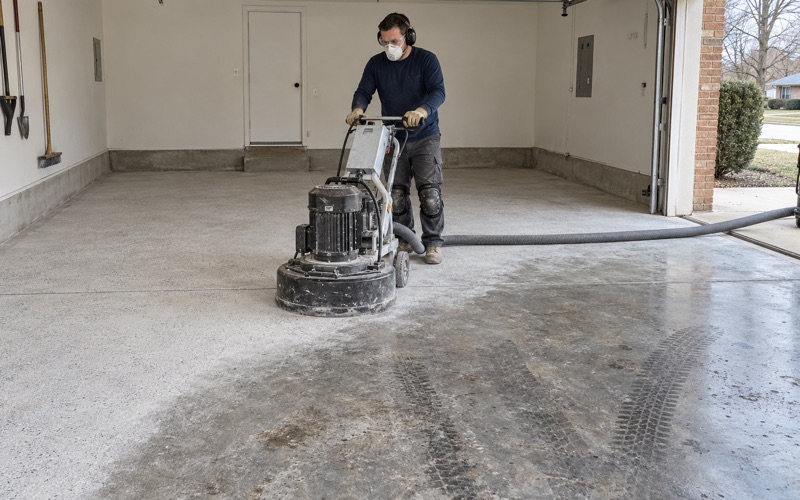
Every slab we take on is opened mechanically, with a diamond grinder or a shot blaster, so the coating has a real profile to grip; we never acid etch. A moisture test sits in the written scope before the price is final. The proposal then names the product line, the number of coats and the finished thickness, so the floor that goes down can be checked against the quote.
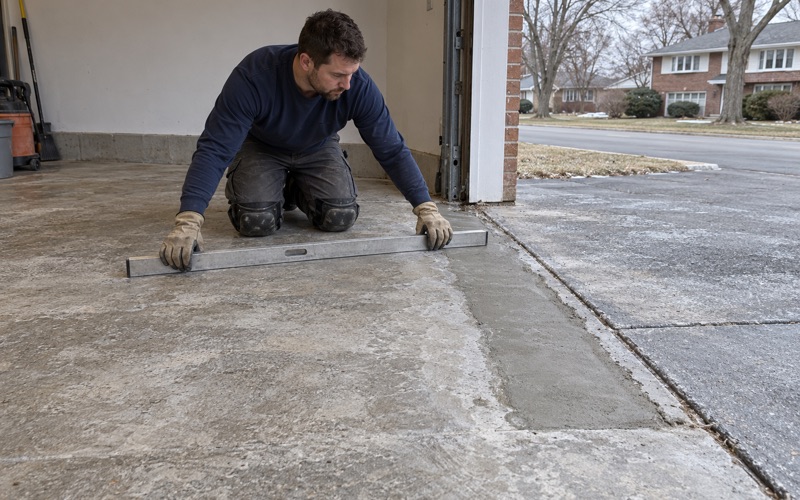
Cracks, spalls and failing old coatings are mapped before anything else. When a slab needs repair, or replacement, before it should be coated, we put that in writing rather than hiding it under a fresh topcoat.
A Battery Shop on Mount Prospect Road and the Rule Behind It
Franklin Park is a village in Cook County, named for the real estate broker Lesser Franklin, who bought up acreage here when most of it was farm fields. Today its industrial streets in Leyden Township carry a great deal of material handling. National Lift Truck lists its central operations at 3333 Mount Prospect Road, and its National Battery division sells and services lead-acid and UL-rated lithium-ion forklift batteries and chargers.
The company lists battery recycling, reconditioning, testing, repair and cleaning among its services, along with rental batteries and chargers, watering carts, regulators and maintenance tools. We have not seen its charging room or its floor, and we make no claim about where its own battery work is done. We name it because it shows the kind of work that keeps forklift fleets running in this area, and that work leaves a mark on concrete wherever a fleet is charged and watered.
What 29 CFR 1910.178(g) asks for
OSHA’s powered industrial truck standard says battery charging installations shall be located in areas designated for that purpose. It then requires facilities for flushing and neutralizing spilled electrolyte, for fire protection, for protecting charging apparatus from damage by trucks, and for ventilation to disperse fumes from gassing batteries.
The same section calls for a conveyor, overhead hoist or equivalent equipment for handling batteries, and a carboy tilter or siphon for handling electrolyte. It keeps the old shop rule that acid is poured into water, never water into acid. Smoking is barred in the charging area, and precautions are required against open flames, sparks and electric arcs.
Why the designation matters for a floor
A designated battery charging area hands a floor contractor something unusual: a defined footprint where the chemical exposure is known in advance. The rest of the building may see only tires, pallets and dust, while this one rectangle sees acid, neutralizer and water. That is the argument for treating it as its own zone.
A coating does not stand in for anything the rule lists. The flushing and neutralizing facilities, the ventilation and the fire protection are separate obligations, and we plan the floor around them rather than claim it replaces them.
Looking for epoxy-flooring closer to River Grove? See Epoxy-Flooring in River Grove.
Electrolyte, Neutralizer and Rinse Water: The Cycle the Floor Sees
Flooded lead-acid batteries are watered on a schedule, and an overfilled cell or one that boils over during a charge pushes dilute sulfuric acid out through the vent caps and down the case. That acid reaches the floor as drips and small puddles along the charger line. It is rarely a dramatic spill, but it repeats, and repetition is what wears out a coating that was never chosen for it.
The neutralizer step
The usual response is an alkaline neutralizer spread over the drip, left to react, then cleaned up. If the rinse is light, a crust stays behind on the floor, and the coating has now seen a base right after an acid. A system in this zone has to tolerate both sides of that swing without softening, staining through or going dull in patches.
The rinse and where it runs
Flushing sends water across the slab toward wherever the room drains or gets squeegeed. Any pinhole, open joint or bare edge on that path lets dilute acid and spent neutralizer reach raw concrete, where it attacks the cement paste beneath the coating. Once that starts, the surface can look intact while the bond lets go underneath.
Cleaning and watering traffic
Battery cleaning and reconditioning add their own wet residue, and watering carts roll in and out of the same footprint every week. We ask how batteries are watered, where cases are washed, and whether that happens inside the charging area or somewhere else. The answers decide how large the acid-tolerant zone needs to be and where its edges belong.
Zoning the Coating to the Charging Footprint, Joints and Edges Sealed
We lay out the acid-tolerant zone from the charger positions and the battery change path, with a margin past where drips and rinse water really travel. Inside it, the system finishes in a chemical-resistant topcoat selected for dilute acid and alkaline cleanup. Outside it, the aisles can carry a 100% solids epoxy or another warehouse system suited to forklift wheels, so the more demanding product goes only where it earns its cost.
Preparation sets the ceiling
Concrete under a charging line that has taken years of acid is often weakened at the surface and contaminated below it. We grind or shot blast down to sound concrete and a measured ICRI surface profile, and we report any area where the slab is too far gone for a coating to hold. Grinding dust is captured at the machine with a vacuum rather than washed toward a floor drain.
Joints, edges and terminations
Control joints, saw cuts and the coating’s own edges are the weak points in this zone. We fill and seal joints so acid cannot track down into them, and we end the coating in a cut keyway instead of feathering it thin, so there is no lip for rinse water to lift. Where the zone meets a wall, the coating is carried up the base or sealed tight to it.
A finish that rinses clean
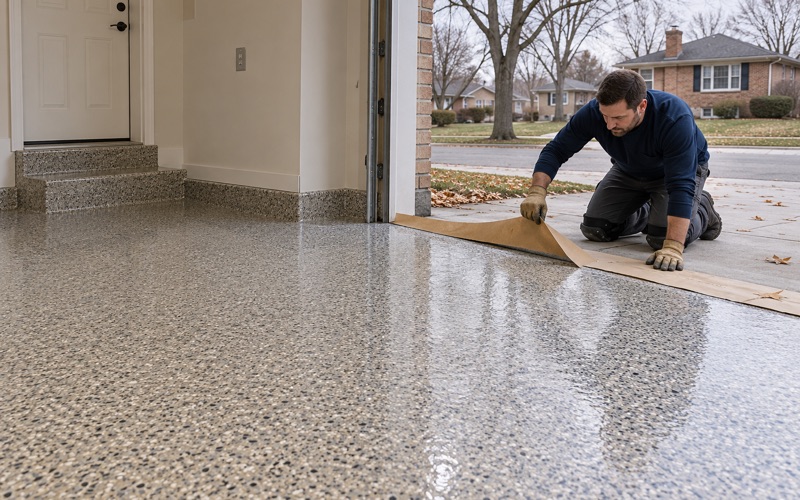
A quartz aggregate broadcast adds grip near the chargers, but deep texture also holds neutralizer crust. We specify slip resistance by the broadcast and topcoat actually used, and we weigh it against how easily the surface rinses, since this floor is washed far more often than most.
Moisture and the warranty conversation
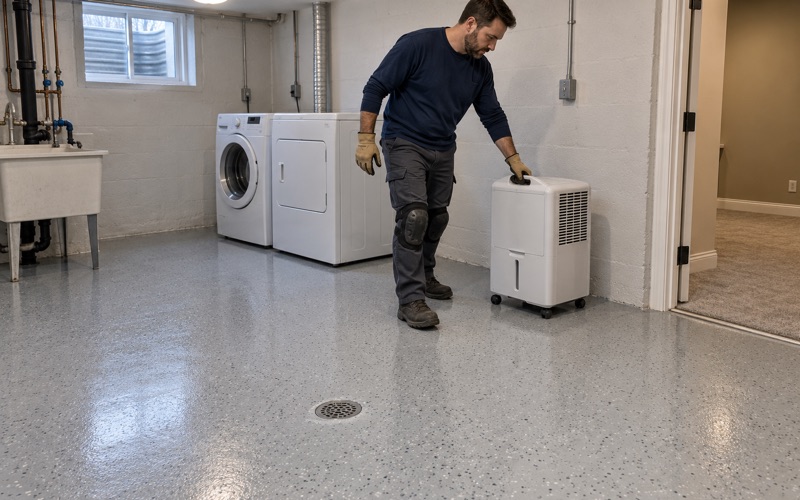
A slab pushing vapor up through a new coating can blister it from below, and acid finds a blister fast. That is why the moisture test stays in the scope, using methods such as ASTM F2170 relative humidity probes. Before the job is sold we also explain what the coating warranty leaves out, and moisture vapor transmission is the first exclusion we name.
Chargers, Hoists and Truck Protection Planned Before Anything Is Anchored
Chargers, battery stands, roller stands and hoists all need fixed positions before the coating is finished. Anchoring a charger rack or a guard post after the floor is down drills holes through the system in the one zone that most needs to stay sealed. We ask for the equipment layout first and coat to that plan.
Truck protection and turning traffic
The rule calls for protecting charging apparatus from damage by trucks, which usually means guard rails, bollards or wheel stops. Those posts concentrate impact and turning traffic at their bases, so we detail the coating around each one and seal every penetration as it goes in. Forklifts swinging in to drop a battery also scrub the same spots every day, and that wear pattern shapes where the heavier build goes.
Lead-acid versus lithium-ion fleets
A fleet moving to lithium-ion forklift batteries changes the floor picture. Those packs are not topped up with water the way flooded lead-acid cells are, so routine electrolyte drips largely fall away, while the chargers and the traffic stay. We ask what the fleet runs now and what it is moving toward, because a mixed fleet still needs the acid zone wherever lead-acid units charge.
Scheduling around a running fleet
Most charging areas cannot simply close for a week, so we phase the work around shifts, with overnight and weekend windows where trucks must keep moving. Cure times are set from slab temperature and dew point, not a calendar day, and nothing goes back into service until the topcoat is ready for it. Products are picked inside the Illinois VOC limits for floor and industrial coatings, which bind whoever applies them.
Village requirements
The Village of Franklin Park requires every contractor working in the village to be licensed, insured and bonded, with a $10,000 trade-specific license and permit bond and at least $1,000,000 in liability insurance. Those requirements and any permit question go to the Village of Franklin Park Building Department on Belmont Avenue before a start date is set.
- 20+ Years on Concrete
- Moisture Test in Every Scope
- Free Written Estimates