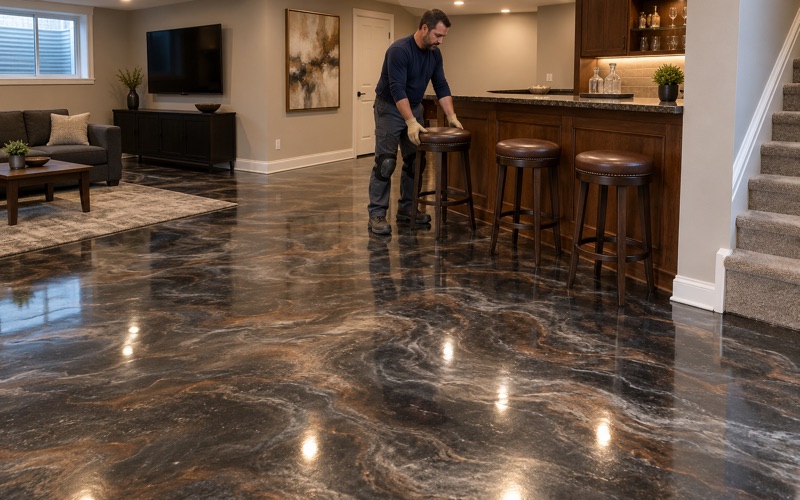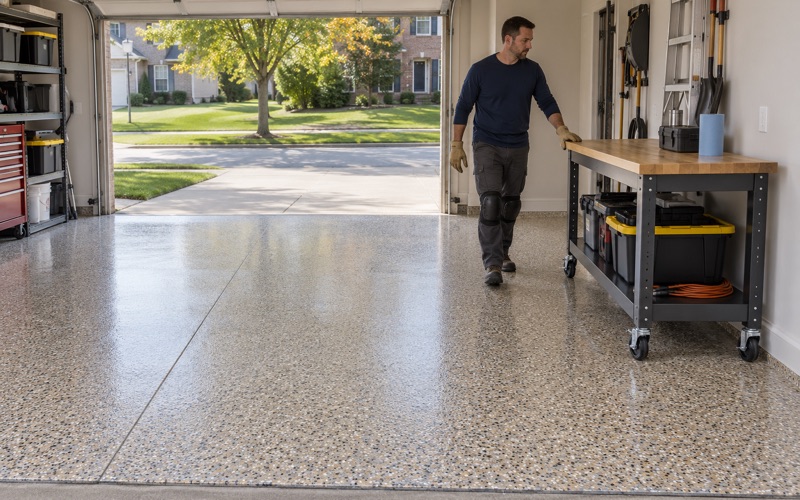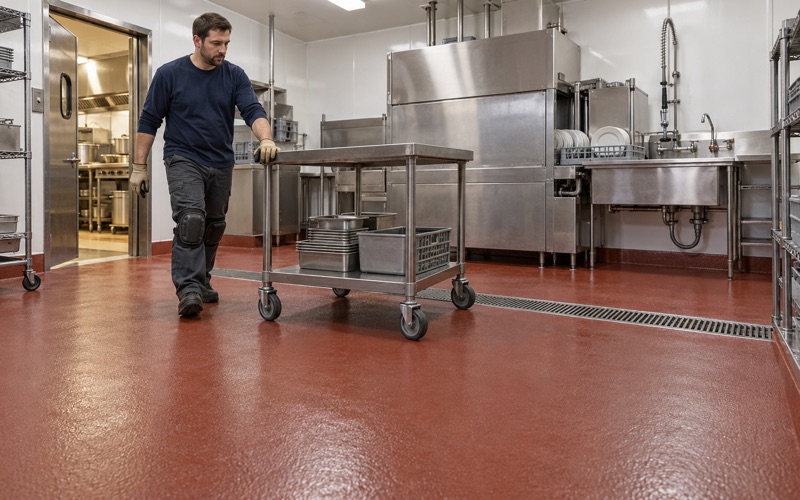
Glenview Epoxy Flooring brings more than 20 years of epoxy flooring work to Lyons, and the floors we think hardest about here are the ones where something spills that should never be hosed away. A shop floor, a utility room or a garage that stores granular products and oils needs a surface that holds a spill on top until it can be swept or soaked up. That is a different job from a showroom finish, and we scope it differently.
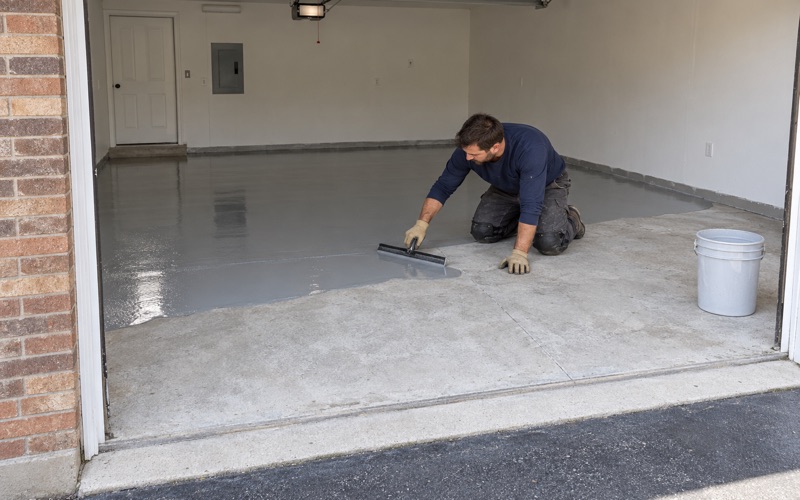
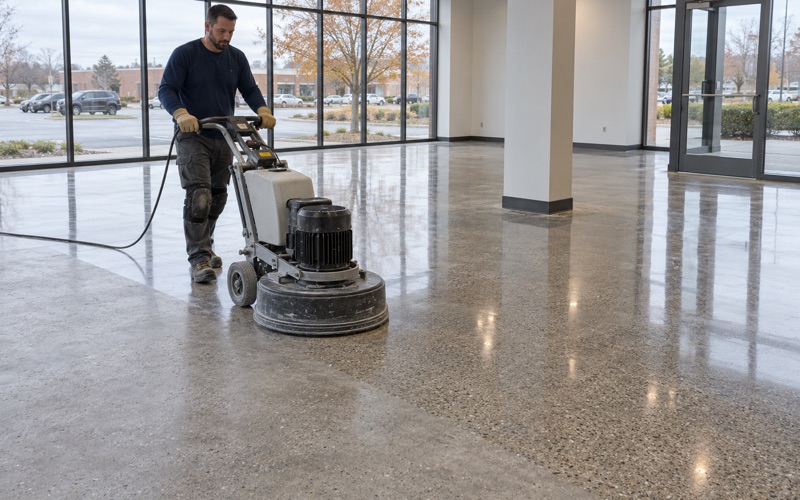
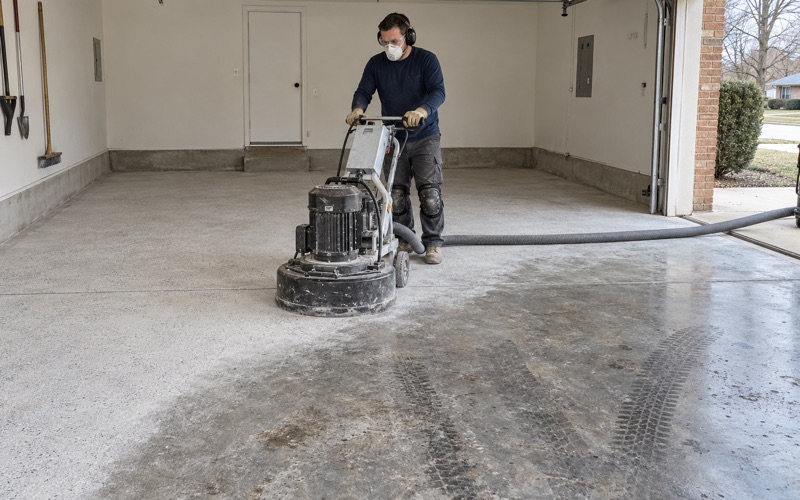
Each slab we take on is opened by diamond grinding or shot blasting rather than acid etching, which leaves a surface profile the resin can actually bond to. Grinding dust goes into a vacuum at the machine instead of being washed toward a floor drain. Before the price is final, a moisture test is written into the scope, and the proposal lists the product line, the coat count and the finished thickness so the floor can be measured against what was sold.
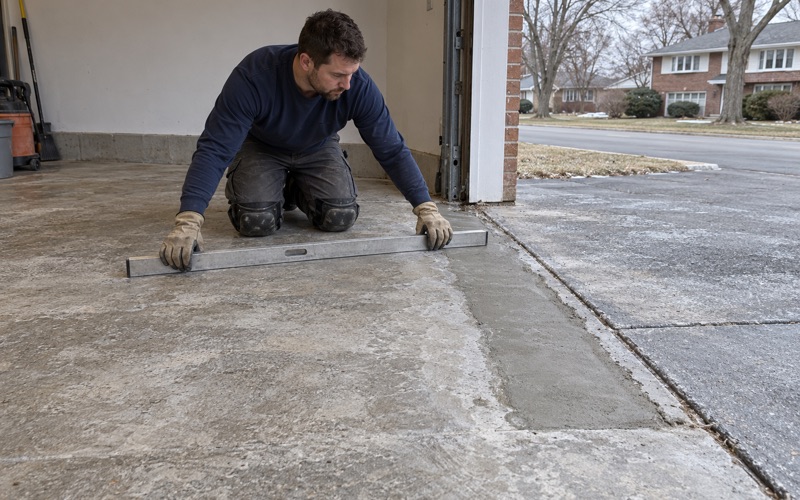
We also map cracks, spalls and any old coating first. When a slab should be repaired or replaced before anyone coats it, we tell the owner plainly, and we explain what a coating warranty excludes before the job is signed, starting with moisture.
A Mosquito District Shop on Ogden Avenue
What the district does from Lyons
The Desplaines Valley Mosquito Abatement District runs its operation from 8130 Ogden Avenue in Lyons. Cook County describes it as an independent district, established in 1927, covering 77 square miles and 31 communities. Its crews treat more than 45,000 street catch basins, 6,200 off-road basins and 2,200 open-water sources, and adult control is done with truck-mounted ULV equipment that runs from dusk to midnight or from 3:00 a.m. to 6:00 a.m.
We have no relationship with the district, and we have not seen how its building floors are finished. What the district publishes about its own handling practices, though, describes a kind of floor work that turns up in plenty of Lyons shops and garages at a smaller scale.
Granules, mineral oil and mounted tanks
The district’s 2026 Best Management Practices describe a specially designed hopper used to transfer 40lb bags of BTI granules into 10-pound jugs that field crews can manage. The stated reason is to minimize spillage and keep the heavy bags out of field use. Its product table also lists BVA 2 Larvicide Oil, a mineral oil applied at 1 to 5 gallons per acre, along with Altosid pellets and briquets and several other granular and water-soluble larvicides.
The trucks carry mounted pesticide tanks that the district specifies as corrosion resistant, with multiple shut-off valves to avoid leaks and spills. The same document says all equipment is cleaned, maintained and stored in the non-mosquito season. Put those together and one building is handling dry granules, an oily liquid and tank servicing on the same concrete through the winter.
From a flooring point of view, those three materials challenge a bare slab in three different ways. Granule fines settle into the texture of open concrete, oil wicks into its pores, and tank washing tempts someone to reach for a hose.
Looking for epoxy-flooring closer to La Grange? See Epoxy-Flooring in La Grange.
Why the Spill Plan Is Absorbent, Not a Hose
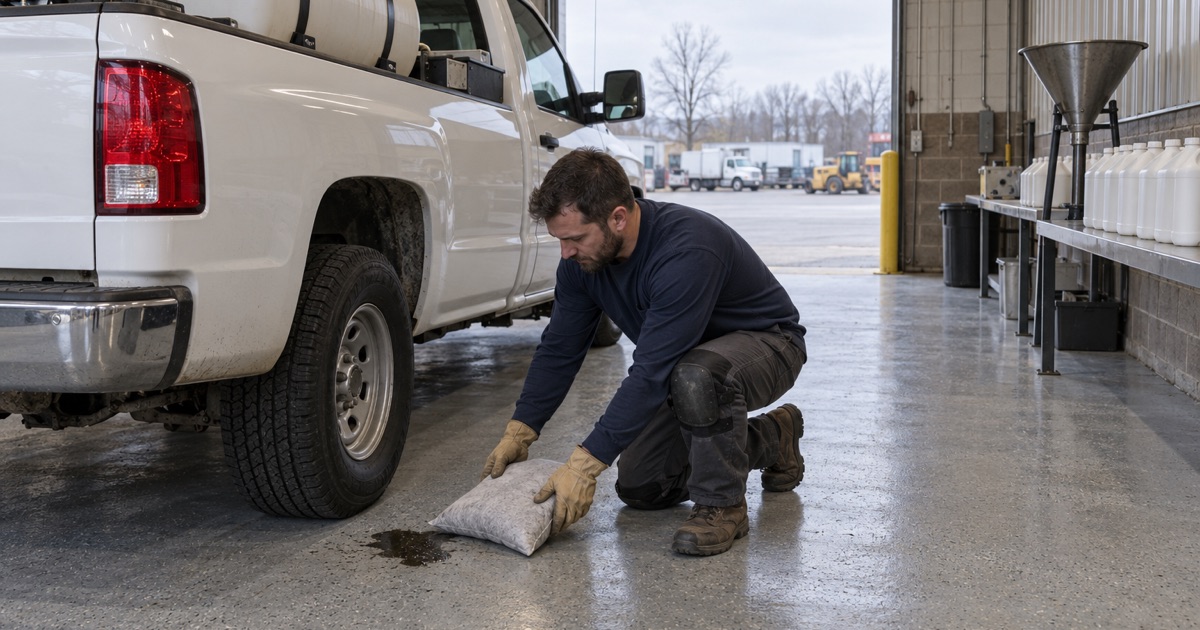
The district’s Pesticide Discharge Management Plan, dated January 2026, says that all vehicles carry proper spill absorption materials. Crews are trained to use those materials to contain a spill and are shown the shut-off valves on each vehicle. Cleanup procedures are pesticide specific and follow each product’s Safety Data Sheet, and reportable releases go to the National Response Center and IEMA.
What that rule asks of a floor
An absorbent plan only works if the spill stays where the absorbent can reach it. On sealed, seamless resin, spilled granules can be swept or vacuumed up dry, and an oil or liquid concentrate sits on the surface until a pad or a granular absorbent lifts it. On bare concrete, the same oil is partly inside the slab before the absorbent arrives, and fines lodge in the surface no matter how carefully it is swept.
That is the case for coating a repack or tank-service area, and it is also the limit of the case. A floor coating is not secondary containment, it does not satisfy any pesticide storage rule, and we do not give advice on handling the products themselves. Those questions belong to the label, the SDS and the people trained and licensed to apply them.
Keeping wash water away from the drain
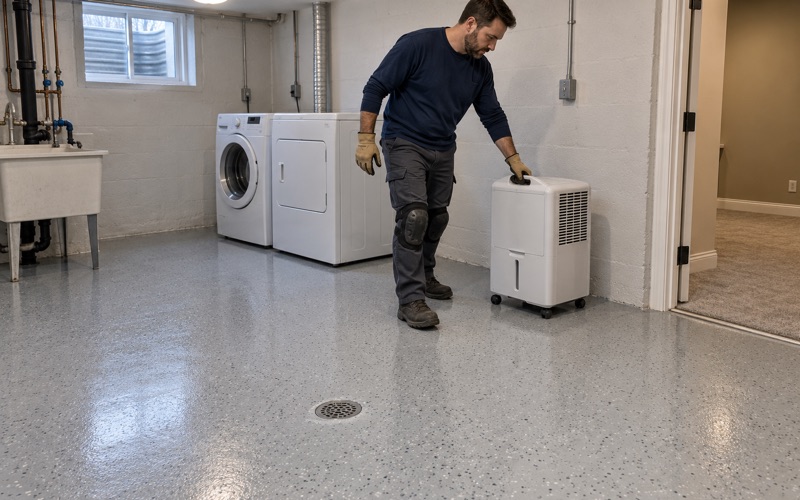
Floor drains are the other half of the problem. A shop that hoses a floor sends whatever was on it toward a drain, and a floor finished with no thought about cleanup invites exactly that habit. We look at where the drains sit, whether the slab pitches toward them, and how cleanup will actually happen before we pick a system, so the finished floor supports dry cleanup rather than working against it.
The same thinking governs our own work. When we grind a slab, the dust is captured by a vacuum at the grinder rather than rinsed toward a drain or a storm inlet.
A Sealed Repack Area With Texture Where Oil Lands
Opening the slab and testing it
A floor meant for dry cleanup has to bond well and stay bonded, so preparation decides most of the outcome. We grind or shot blast to an ICRI concrete surface profile that suits the system, map every crack and spall, and repair them before the resin goes down. A seam or an open crack is where granule dust and oil collect, so a floor that is supposed to be seamless has to be made seamless at the prep stage.
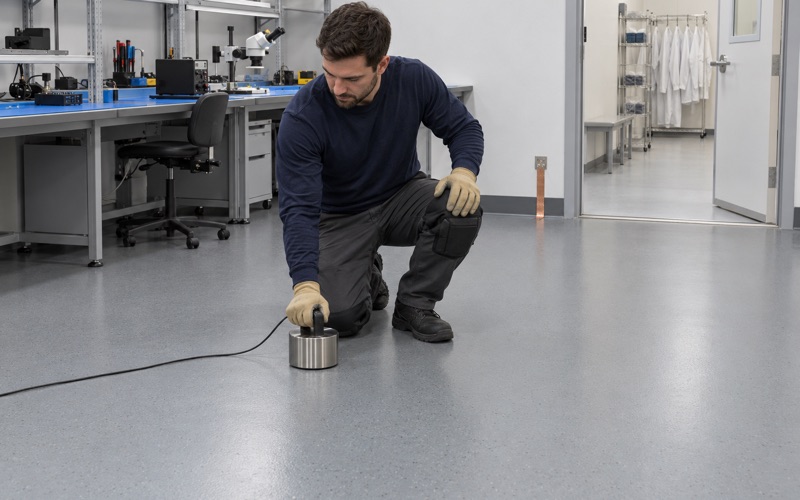
Moisture comes next. Depending on the slab, we use ASTM F2170 in-situ relative humidity probes, ASTM F1869 calcium chloride testing or a quick ASTM D4263 plastic sheet check, and a slab that reads high gets a moisture-mitigation primer or a different plan. A coating that traps vapor under it will lift, and a lifted coating is just a new place for spills to hide.
Choosing the system
For a working repack or service floor, a 100% solids epoxy base gives a dense, hard surface that a broom and a shop vacuum can clean. A polyaspartic or polyurea topcoat over it adds wear and chemical resistance at the surface. Where a floor sees heavier abuse or wide temperature swings, urethane cement is the more forgiving choice, and we say so in the proposal rather than leaving the owner to ask.
Traction where mineral oil can land
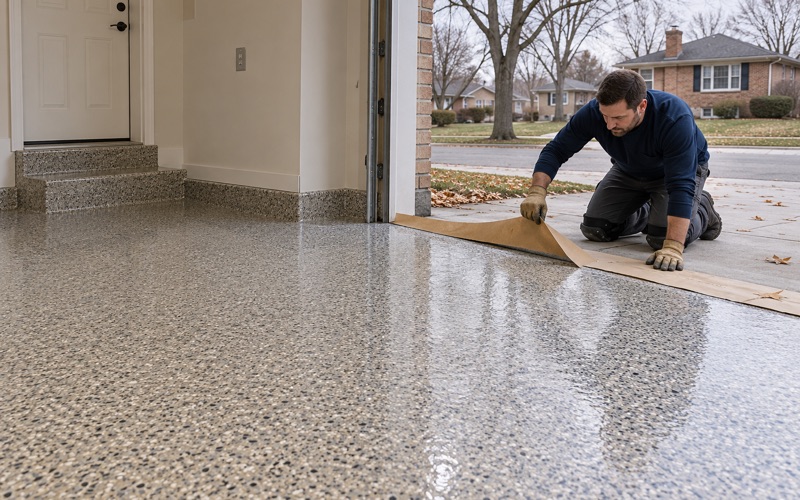
A mineral-oil film on a smooth, glossy topcoat is a slip hazard, which is the one real drawback of a very cleanable floor. In the zone where oil is poured, stored or carried, we broadcast quartz aggregate into the system and lock it in with the topcoat, so the texture is set by the material and the number of passes rather than promised as a slogan. Outside that zone the floor can stay smoother for easier sweeping, and we draw the boundary with the owner before we start.
Cure is scheduled from slab temperature and dew point, not from a date on the calendar. An unheated building in deep winter is often told to wait, because a coating cured too cold can show amine blush and never reach its full properties.
Garden Granules and Lawn Products in a Lyons Garage
Most Lyons floors are not district shops. The village added essentially no new housing in the 2010s, and with 2,765 single-family detached homes alongside a sizable stock of two-flats, the typical job here is an existing garage or basement slab that has been in service for decades. Many of those garages hold lawn fertilizer, granular weed and insect products, a mower, a gas can and a bag of ice melt, which is a small version of the same floor problem.
Granules on a coated garage floor
A torn bag of granular lawn product on bare concrete leaves fines in every pit of the surface, and a damp floor can start to dissolve them in place. On a sealed flake or quartz floor, the spill can be swept or vacuumed up dry and handled according to the product label, with nothing worked into the slab. A spilled jug of liquid concentrate is taken up with an absorbent, and nobody needs to hose the garage out toward the street.
We do not give product-handling advice, and the label always governs. What we can do is make the floor cooperate with a dry cleanup instead of fighting it.
Salt, landlords and what the paperwork covers
A Lyons garage also takes brine and rock salt off tires every winter, so we choose garage systems with deicers in mind as much as lawn products. About a third of occupied homes in the village are rented, so the person deciding on a garage or basement floor is often a landlord, and our proposal is written so an owner who never stands in the garage can still check the finished floor against it.
On home jobs over the state threshold, we provide a written contract and the Illinois Home Repair: Know Your Consumer Rights pamphlet before any grinding starts. The Village of Lyons has its own contractor license application and building requirements, so we check what currently applies before a job is quoted. A floor coating is never sold as radon reduction, because in Illinois that is licensed mitigation work.
- 20+ Years on Concrete
- Moisture Test in Every Scope
- Free Written Estimates