Glenview Epoxy Flooring has spent more than 20 years on epoxy flooring in Norridge and the towns around it, and one lesson from industrial floors carries further than most people expect. Some floors have to stay dry by rule, not by preference, and the schedule for coating them is set by what happens on top of the slab every day.
That is the subject of this page. We look at a working floor where water is the hazard, explain how that floor gets cleaned, and walk through why any resurfacing waits until the equipment is cold and the coating has fully cured.
The same reasoning applies on a smaller scale in a home garage where someone melts metal for a hobby. Whether the room is an industrial bay or a two-car garage, we plan the floor around the work done on it, and we say plainly what a coating can and cannot do.
A Zinc Die-Casting Plant Inside a Residential Village
Most of Norridge is houses. Of the occupied homes in the village, 82.4 percent are owner-occupied, and the bulk of the housing went up in the 1950s and 1960s, so the garage floor is the job we are asked about most often.
There is also a factory most people drive past without a second look. Knowing what goes on inside it explains a floor rule that applies anywhere hot metal is handled.
Cast Products on North Nordica Avenue
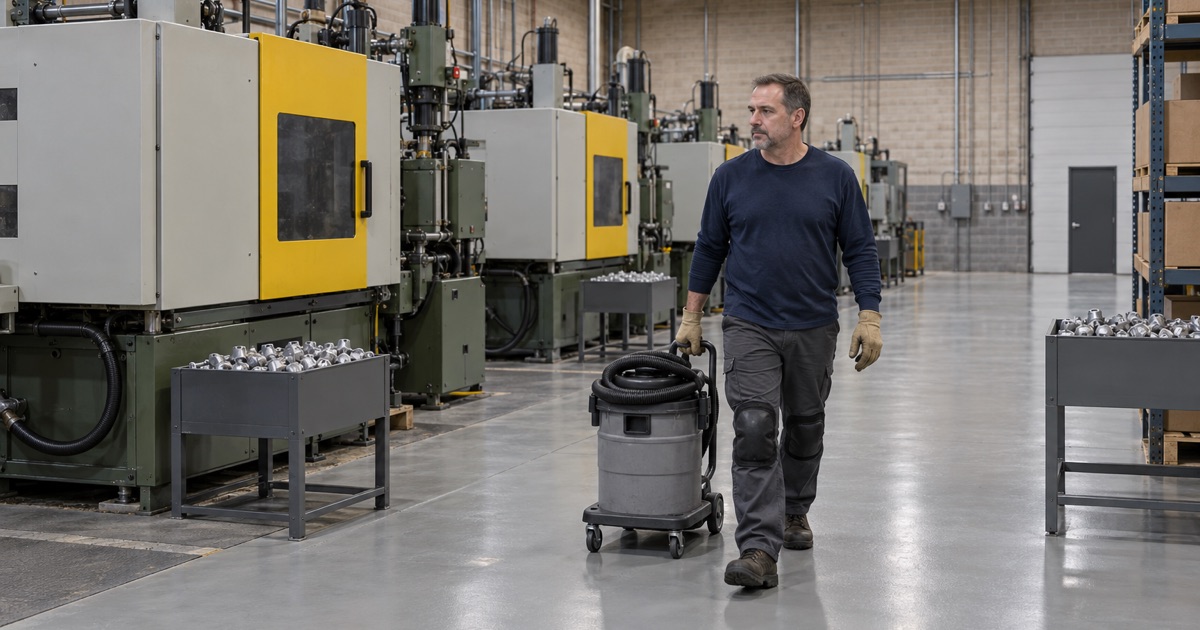
Cast Products, Inc. sits at 4200 North Nordica Avenue, inside the village and within Norwood Park Township in Cook County. The company was founded in 1966 and makes high-volume engineered zinc die-cast parts for electrical, industrial and automotive customers. It lists 28 hot-chamber die cast machines, and it says the majority of its production uses the multi-slide die casting process, with larger conventional hot-chamber parts as well.
The plant also lists secondary operations, including vibratory and thermal deburr. The company names Zamak 3 as about 85 percent of all zinc casting tonnage. We have no relationship with the plant, and we have not seen its floors or how it cleans them. What follows is drawn from the alloy maker’s published safety guidance and from how a floor around that kind of work is generally treated.
Why Molten Zinc and a Wet Floor Do Not Mix
The safety data sheet one European supplier, Nyrstar, publishes for zinc die-casting alloys is blunt about water. It states that “the melting down of moist metal leads to explosion risk” and that in the molten state zinc has a “violent to explosive reaction with water (moisture).” It tells users to “add only dry material to the metal bath.”
For a small fire, the same sheet lists dry sand or a Class D powder extinguisher as suitable and names water, foam and CO2 as unsuitable. When metal is cooling, it says there should be no water in the substance at all. Taken together, those lines mean the floor around a melt pot is a dry floor by necessity.
Looking for epoxy-flooring closer to Schiller Park? See Schiller Park Epoxy-Flooring.
Cleaning a Casting Floor Dry
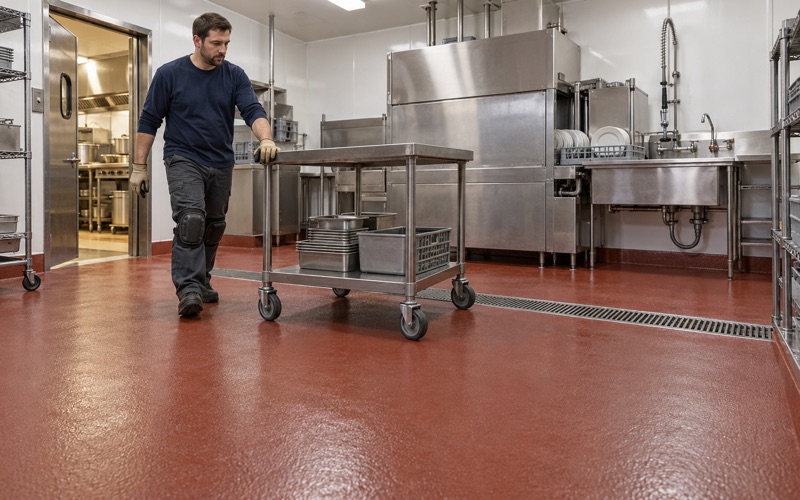
A wet mop is the default cleaning tool on most commercial floors, and it is exactly the wrong tool beside molten zinc. A casting floor is cleaned by sweeping and vacuuming instead. Water on the slab is a risk the moment it can reach hot metal, whether by splash, by a dropped part or by a tool carried across the floor.
Sweep and Vacuum While Pots Are Hot
While the pots are hot, dust, flash and fine debris come up with brooms and vacuums, not hoses. That shapes what a good floor surface looks like here. A smooth, sealed finish releases fine particles to a broom and a vacuum far more easily than bare, dusty concrete, which keeps shedding its own surface into the swept pile.
It also shapes texture choices. A heavy aggregate broadcast grips boots but holds fine debris, so we size any slip-resistant texture to the cleaning method the floor will actually get. We specify that texture by the broadcast and topcoat used, so the result can be checked rather than taken on faith.
Spilled Metal Is Left to Solidify
The supplier’s instruction for a spill is short: “If melted: allow liquid to solidify before taking it up.” Nobody throws water on it to speed the cooling. The metal is left to set and is then picked up as a solid.
This is where we are careful about claims. A floor coating is not a fire barrier and does not protect against splashed molten metal. Anyone who tells a shop owner otherwise is selling a coating for a job it cannot do, and we will not write that into a proposal.
Remelt Scrap Kept Off Wet Areas
In die casting, runners, gates and flash are commonly gathered and remelted. Because only dry material may go into the bath, scrap bins belong away from any wash-down area, floor drain or spot where water collects. The same sheet says the alloy should be stored in a dry area at a temperature above the dew point.
That last point lines up with how we cure coatings. Dew point governs whether moisture condenses on a surface, and it matters as much to a fresh coat of epoxy as it does to stored metal.
Scheduling Floor Work Around Cold Pots and Full Cure
Any resurfacing in a casting area waits for two things. The melt pots must be cold, and the new coating must be fully cured before metal is melted again. Neither step can be shortened to save a shift.
Cold Pots Before Any Grinding
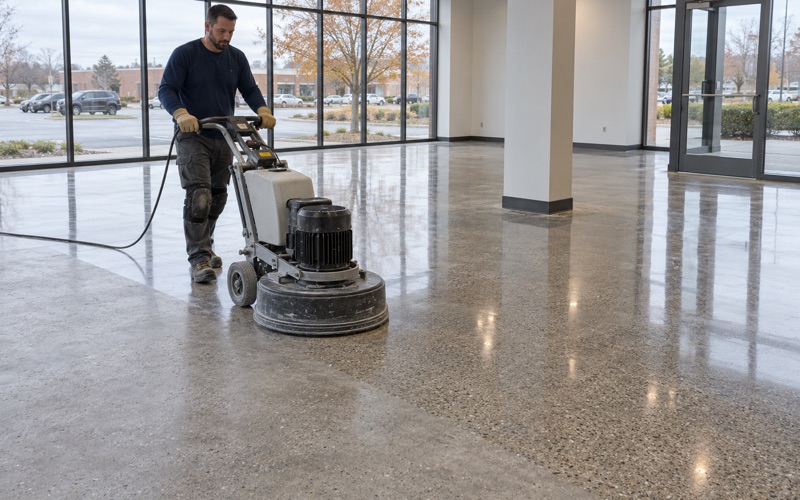
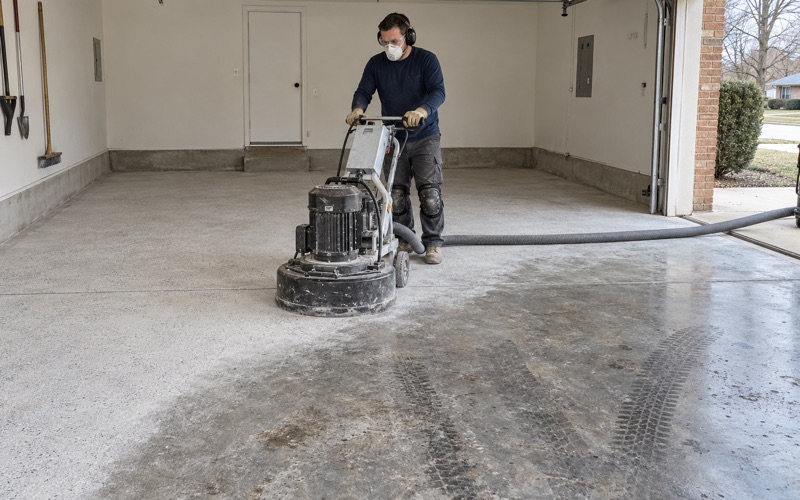
Surface preparation throws dust, and some coating systems need water or solvent at certain steps. None of that belongs near a hot pot. We plan the work for a shutdown window, and we capture grinding dust at the diamond grinder with a vacuum rather than rinsing it toward a drain.
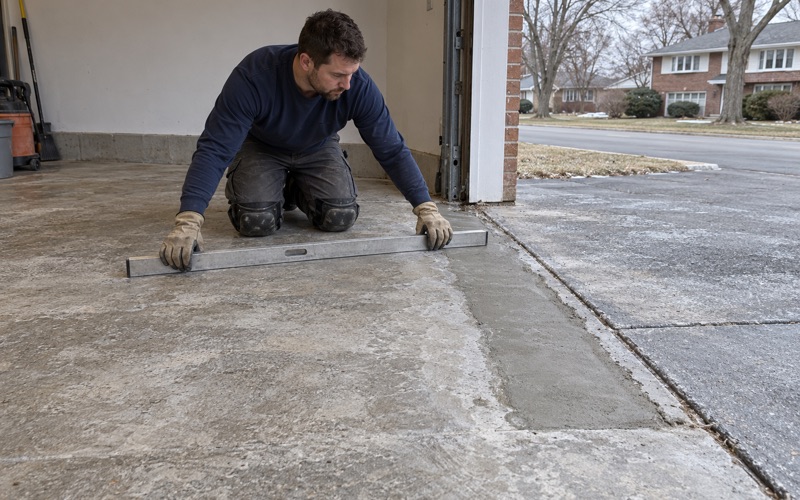
We also map cracks, spalls and old coatings before pricing. If a section of slab needs repair or replacement before it should be coated, we say so up front, because a coating laid over a failing slab fails with it.
Cure by Slab Temperature and Dew Point
A cure schedule printed on a data sheet assumes certain conditions. We follow the actual slab temperature and the dew point spread at the slab surface instead of the calendar. A coating that cures too close to the dew point can develop amine blush, a waxy film that weakens the bond of the next coat.
When the room is cold, the cure takes longer, and the restart date moves with it. We would rather tell an owner the floor needs another day than hand back a surface that is soft underneath.
Moisture Testing in the Written Scope
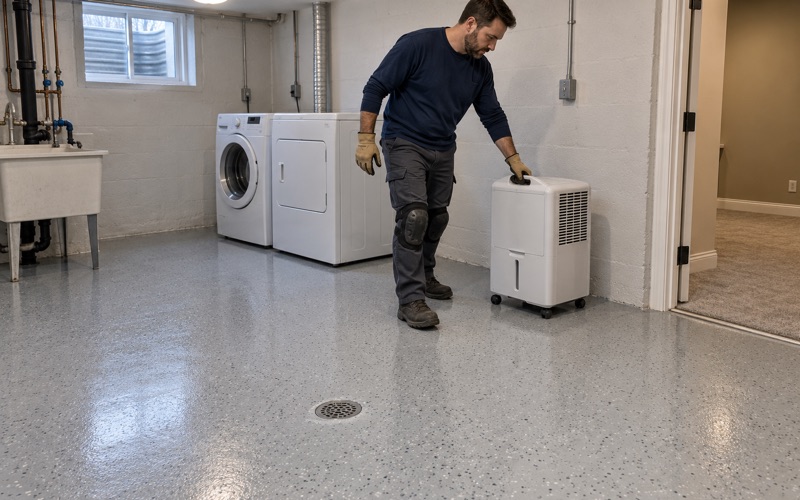
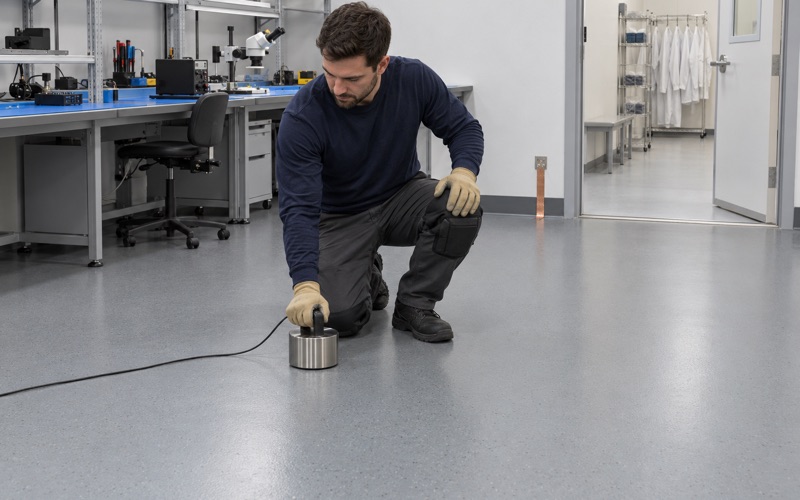
A dry floor on top does not prove a dry slab underneath. Moisture testing is part of the written scope before the price is final, using methods such as the ASTM F1869 calcium chloride test or ASTM F2170 in-situ relative humidity probes. If readings come back high, a moisture-mitigation primer goes into the system, and the proposal says so.
The proposal also names the product line, the number of coats and the finished thickness. We explain what the coating warranty leaves out before the job is sold, and moisture vapor transmission is the first exclusion we name.
What the Same Rule Means for a Home Shop That Melts Metal
Norridge has plenty of detached houses with a garage, and a garage is where a hobby furnace for casting small parts or melting scrap usually ends up. The physics does not change at hobby scale. Wet metal, damp molds and puddled water near a melt carry the same risk the supplier describes.
Keep the Melt Area Dry, Whatever the Floor
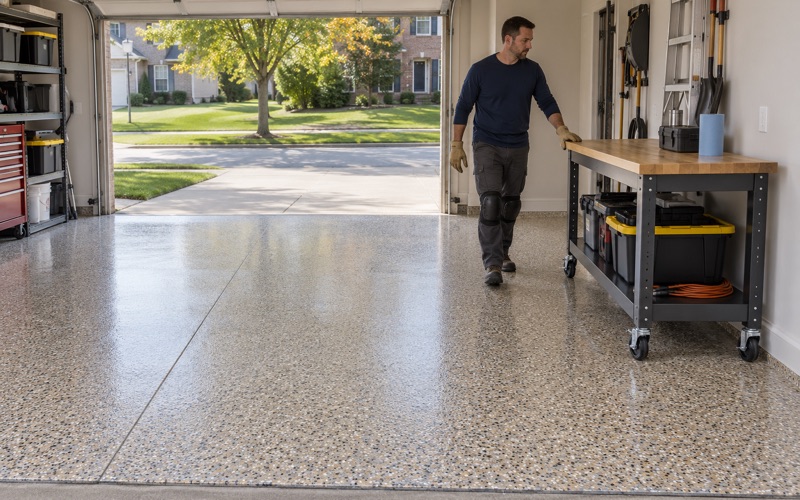
An epoxy floor in a home shop makes sweeping easier and keeps oil and rock salt from soaking into the concrete. It does not make the floor safe for molten metal, and we will not describe it that way. Many hobbyists set the furnace over a separate bed of dry sand so a spill lands somewhere other than the coated slab.
The practical rules echo the industrial ones. Keep scrap and tools dry before they go into the crucible, keep mops and buckets away while metal is hot, and let any spill set before picking it up.
Coating the Rest of the Garage
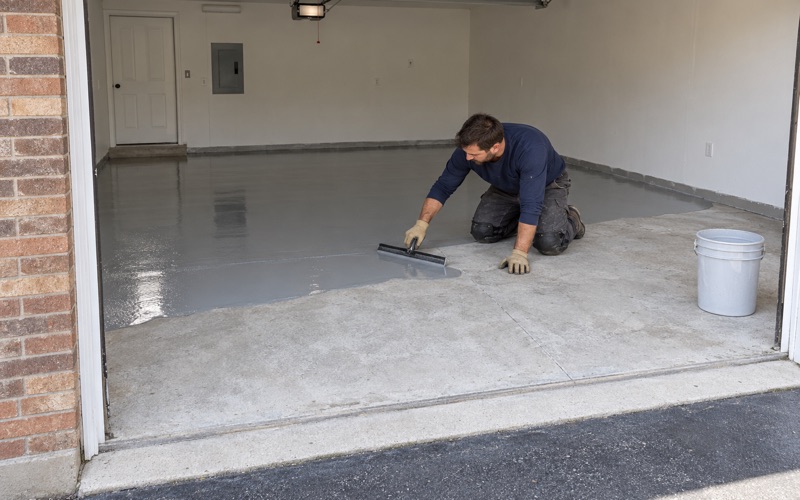
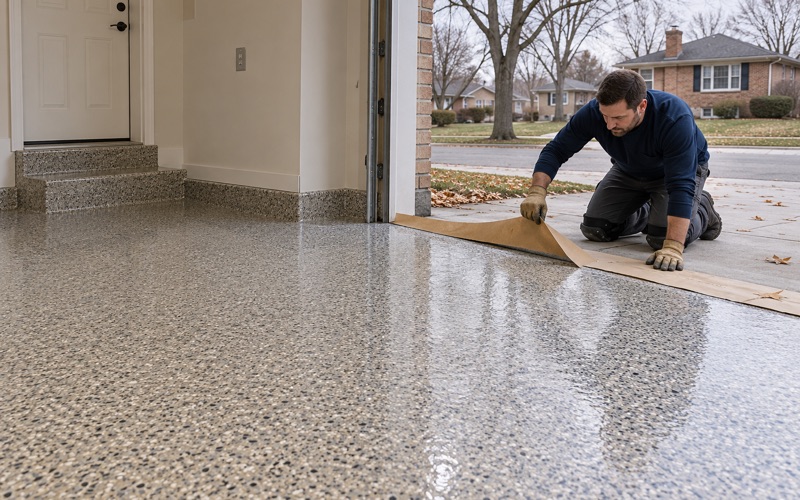
The parking side of a garage is a normal coating job. We choose systems that stand up to the brine and rock salt that ride in on tires through a Chicago-area winter, and that resist hot tire pickup. Products are picked inside the Illinois VOC limits for floor coatings, which apply to whoever applies them.
We also time the work to the season. An unheated garage in deep winter is often told to wait for warmer slab temperatures, since a coating rushed into a cold slab rarely holds.
Village Paperwork Before the Grinder Starts
The Village of Norridge Building Department, at 4000 North Olcott Avenue, requires a permit for all construction, remodeling or upgrading of property, and registers contractors annually by calendar year. Inspection appointments are made at least 24 hours ahead. We confirm what the village needs before a job is put on the schedule.
On home jobs above the state threshold, a written contract and the Illinois Home Repair: Know Your Consumer Rights pamphlet come before any grinding. That way the scope, the price and the homeowner’s rights are on paper first.
- 20+ Years on Concrete
- Moisture Test in Every Scope
- Free Written Estimates