Glenview Epoxy Flooring has spent more than 20 years on epoxy-flooring in Prospect Heights and the surrounding north suburbs, and most of that work turns on one question asked before any price goes on paper: what will this floor actually have to survive? Water, heat, road salt, foot traffic and cleaning chemicals each push a resin system in a different direction, and the right answer for one room can be the wrong one six feet away.
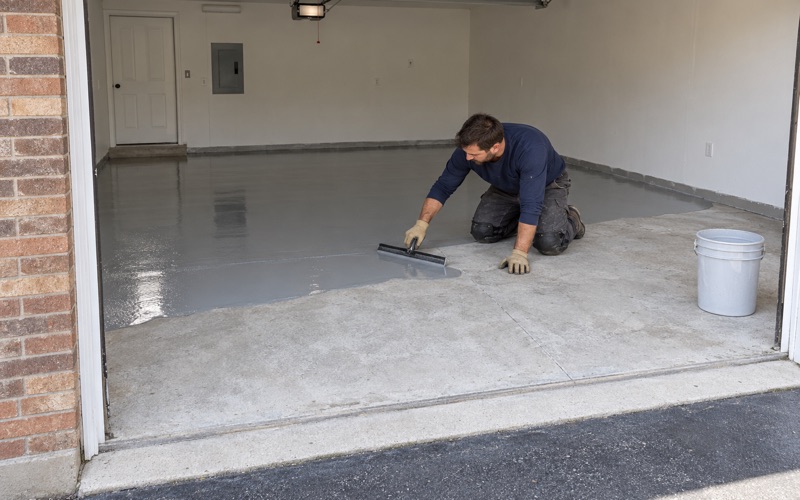
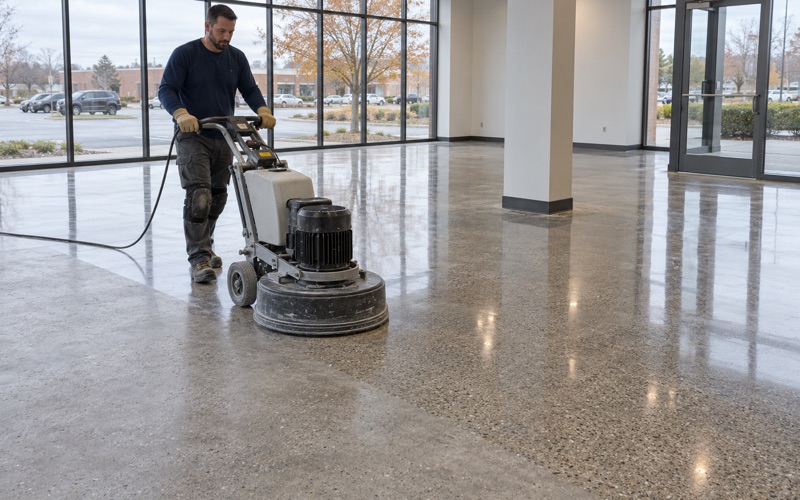
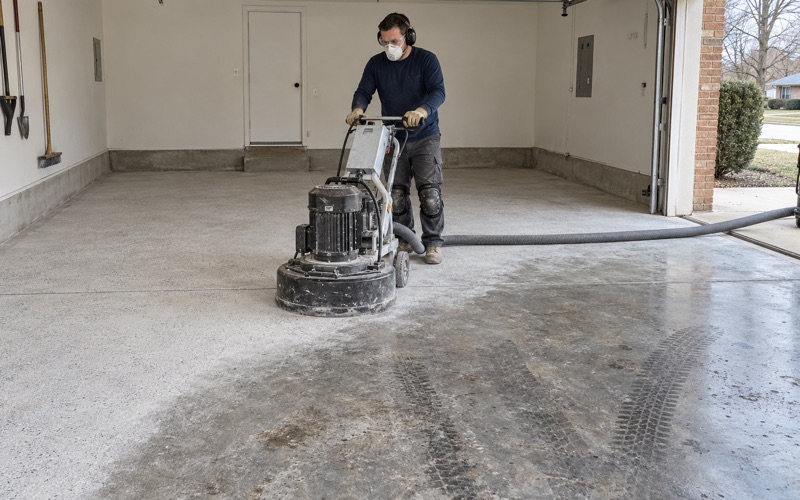
That is why our quotes start with the slab rather than the color chart. We open the concrete with a diamond grinder or a shot blaster instead of an acid wash, test it for moisture as part of the written scope, and hand over a proposal that names the product line, the number of coats and the finished thickness, so the floor you get can be checked against the paper you signed.
It is also why we will tell you where a coating should not go. Some rooms, in homes and public buildings alike, run hotter than standard epoxy tolerates, and an honest scope draws a line at their door.
A Sauna in Each Locker Room at the Gary Morava Recreation Center
The Prospect Heights Park District runs the Gary Morava Recreation Center at 110 W. Camp McDonald Road, inside the city limits in Wheeling Township, Cook County. Its fitness center page lists locker rooms for members and a sauna in each locker room, with the key picked up at the front desk, and the doors open at 6:00 a.m. on weekdays. We have not been inside those saunas and do not know what their floors are made of; the district is a neighbor we point to, not a customer.
What the building shows is a pairing that turns up in health clubs, school athletic wings, office gyms and a growing number of private homes: a wet room and a hot room sharing a wall and a door. To a floor, those are two different jobs, and treating them as one is how a good coating ends up failing in the wrong place.
The locker-room side
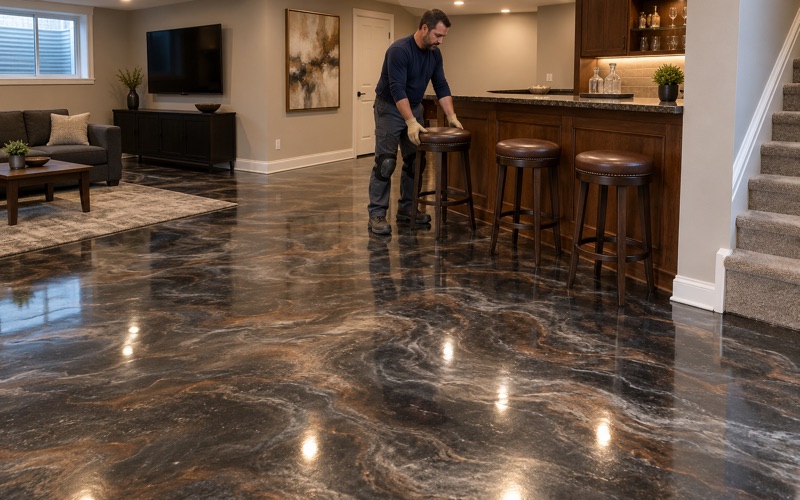
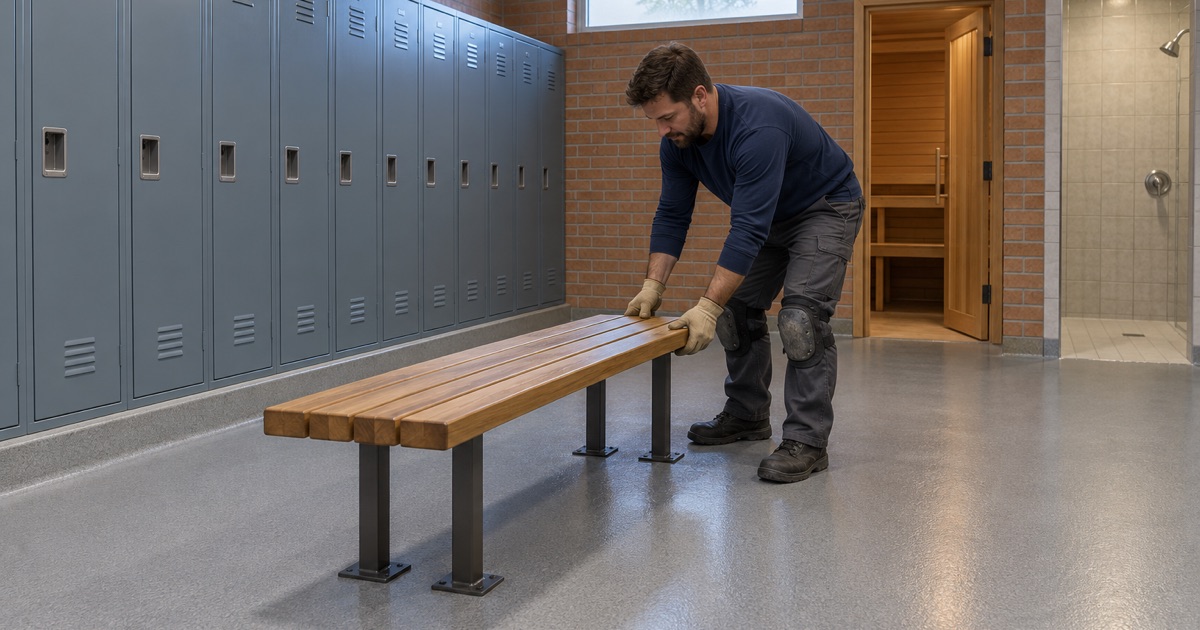
A locker room takes bare wet feet, water tracked in from the showers and disinfectant mopping every day. That is a strong case for a seamless resin floor. With no grout lines there is nowhere for soap film and standing moisture to settle, and the surface can be cleaned with the same mop and chemical every morning without wearing a pattern into it.
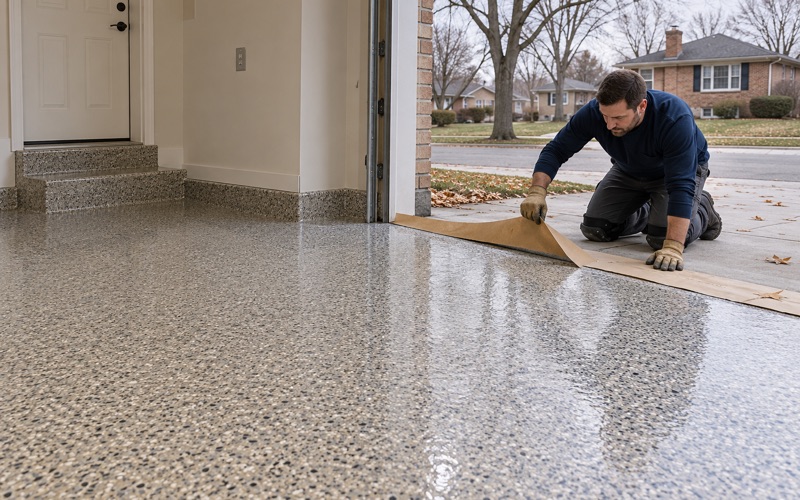
Texture is the other half of a locker-room floor. A quartz aggregate broadcast locked under the topcoat gives bare feet something to feel, and how coarse that texture runs is set by the aggregate size and the topcoat build. We write both into the proposal instead of promising a nonslip floor as a slogan.
The sauna side
Through the sauna door, the conditions flip. The air is dry, the heat is sustained for long stretches, and the room is designed to get hotter than any other space in the building. Water hardly matters there. Temperature is the whole story, and it is the one condition a standard floor coating handles worst.
Looking for epoxy-flooring closer to Deerfield? See Deerfield Epoxy-Flooring.
194 Degrees at the Ceiling and What Heat Does to Standard Epoxy
The model residential code, in Section M1902, requires a sauna heater to have a thermostat that limits room temperature to no more than 194 degrees, with the sensor mounted within 6 inches of the ceiling. Commercial saunas fall under the mechanical code rather than that residential section, but 194 degrees is a fair benchmark for what a sauna room is built to reach.
Two details about that number matter for a floor. It is a cap, not a measurement, and it is read near the ceiling. Heat rises, so the floor of a sauna runs cooler than the air up by the sensor, but none of the sources we rely on measured how much cooler, and we are not going to guess at a figure and then build a floor around it.
Where standard epoxy softens
An epoxy specification manual from Edison Coatings states that most standard Bisphenol A epoxies soften at 110 to 160 degrees. The 100% solids epoxy that makes an excellent base coat in a garage or a locker room belongs to that family. Softening is not melting; it means the film loses hardness, takes impressions from a bench leg or a heater stand, and can begin to let go at the edges, where a coating is already working hardest.
Set those two ranges side by side and the conclusion is plain. A room whose air is allowed to reach 194 degrees sits above the range at which a standard epoxy starts to give, and the floor is close enough to that air to make the gamble a poor one.
Higher-heat chemistries are a separate conversation
The same manual notes that higher service temperatures call for harder, higher temperature resistant epoxies such as novolacs. Epoxy novolac and urethane cement systems exist for floors that cannot avoid heat or harsh exposure, and they are worth weighing in those settings. Even so, a product’s heat tolerance comes from its own technical data sheet, not from a contractor’s sales pitch, and no coating we install is sold as a sauna floor. For a room built to run hot for hours at a time, the surfaces sauna makers already name are the better call.
Where the Coating Stops: Thresholds, Duckboards and Heater Clearance
Steamist, a sauna-room kit maker, says a sauna floor can be any surface that is easy to sweep and clean, and that it is typically concrete, tile or rolled goods such as vinyl or linoleum. A duckboard laid loose in the walk area is optional and designed to be removed for cleaning. That gives a clear plan for any locker room or changing area that opens into a sauna: resin up to the door, and a heat-suited surface beyond it.
Ending the system at the threshold
The coating should stop on a straight, deliberate line at the sauna door rather than thinning out into the hot room. We grind the full locker-room floor to a profile the primer can bite into, then saw a shallow keyway along the threshold so the edge of the film is locked into the concrete instead of sitting there as a thin lip that a cart wheel or a mop head can catch and peel. A transition strip under the door covers the change from one floor to the other.
The termination is planned before the grinding starts, not improvised at the end. It goes on the drawing, it shows up in the written scope, and the customer knows from the first conversation that the sauna floor itself is not part of our job.
Concrete, tile or sheet goods inside
If the sauna sits on existing concrete, that slab can be cleaned and left bare, which is one of the options the kit maker lists. Tile and sauna-rated sheet goods are the other routes, and those belong to the tile setter or the sauna supplier who stands behind the heater installation. We would rather hand that work to the right trade than stretch a resin system into a room it was never formulated for.
Keeping clear of the heater
The heater and the benches are the hottest zone in the room, and the same code section requires the heater to be guarded with a low-conductivity material such as wood. Nothing we apply runs under the heater stand, behind the guard or up the bench supports. A removable duckboard over the walk path keeps feet off the bare floor and lifts out so the surface beneath can be swept and left to dry.
Home Saunas and Steam Showers in Prospect Heights Basements
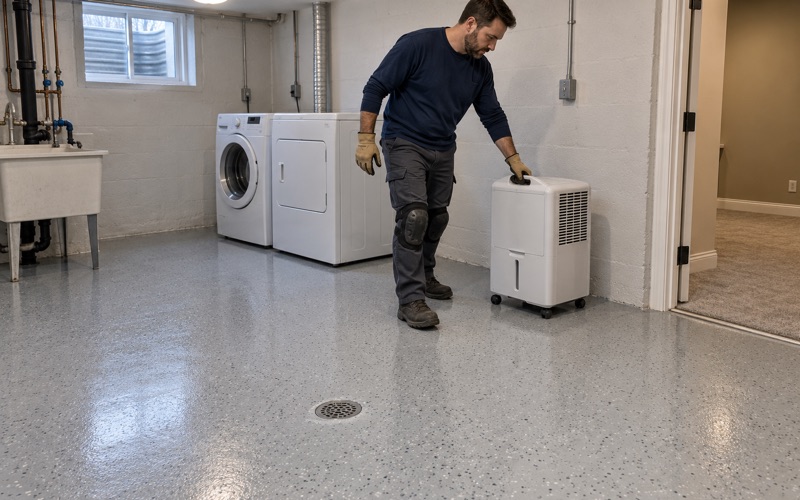
A basement is where most home sauna kits end up, usually next to a bathroom, a workout corner or a laundry room. The same split applies at home as at the recreation center: the changing area and the rest of the room can carry a resin floor, and the sauna’s own floor stays concrete, tile or a sauna-rated sheet good.
Read the basement before the sauna goes in
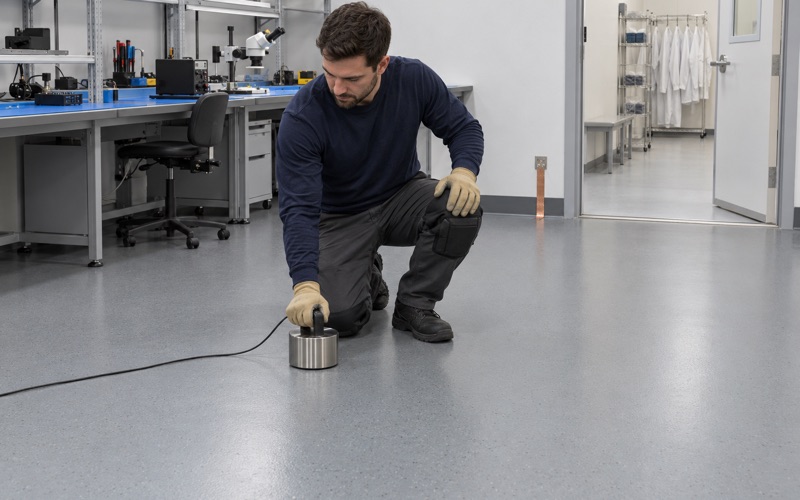
We look at a basement floor for signs of past water before anything else, because a coating does not stop seepage or a sewer backup, and a floor coating is not waterproofing. Stains along the wall line, rust rings under old shelving and white mineral deposits all tell part of that story. Then the slab is tested, with ASTM F2170 in-situ relative humidity probes or an ASTM F1869 calcium chloride test, and the readings decide whether a moisture-mitigation primer belongs in the system.
If the project pours new concrete for a sauna pad or a patched floor, note that the City of Prospect Heights lists concrete flooring for basements and garages among its required building inspections. That inspection belongs to the pour, and a fresh slab still has to dry before any resin goes on it.
Curing a cool, damp room
Basement slabs stay cool year round, and cool concrete under humid air is where amine blush and slow cures come from. We schedule each coat by slab temperature and the dew point spread at the slab surface rather than by the calendar, and grinding dust is pulled into a vacuum at the machine instead of being rinsed toward a floor drain. If the readings say wait, the job waits.
Steam showers are a waterproofing job first
A steam shower is a different animal from a dry sauna: wet heat inside a sealed enclosure. The inside of that enclosure needs the membrane and tile assembly the steam generator maker specifies, and that is a waterproofing and tile scope, not a coating scope. Our part is the floor outside the glass, finished with a texture chosen for wet bare feet and a written proposal that shows, line by line, where the resin starts and exactly where it stops.
- 20+ Years on Concrete
- Moisture Test in Every Scope
- Free Written Estimates