Glenview Epoxy Flooring brings more than 20 years of slab work to epoxy-flooring in Schiller Park, and on a heavy-freight floor we spend as much time on how the coating will be treated after we leave as on how it goes down. A resin system that is installed well can still be ruined in a season by the way loads cross it. The installation and the house rules are two halves of one job, and we quote them together.
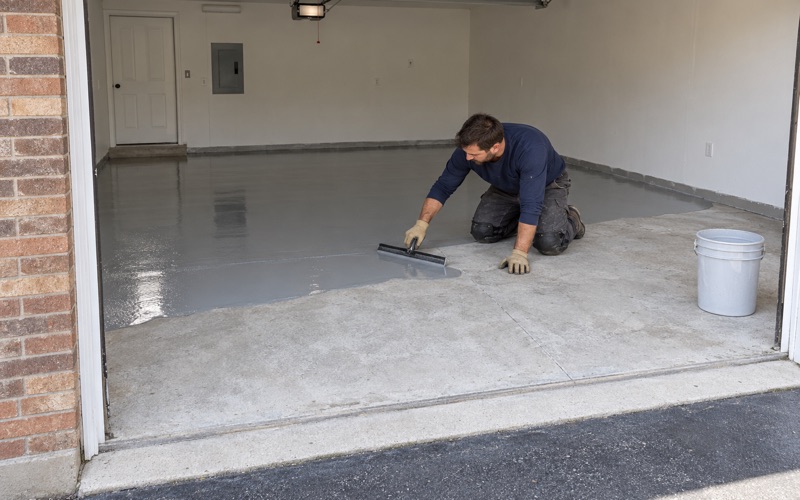
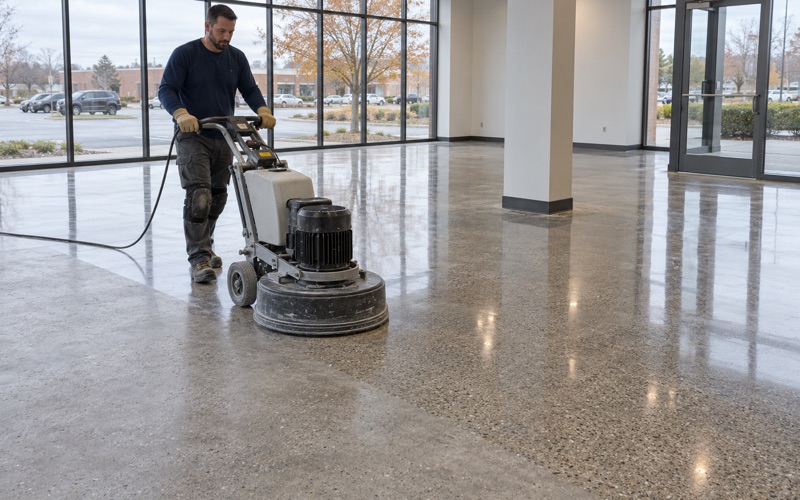
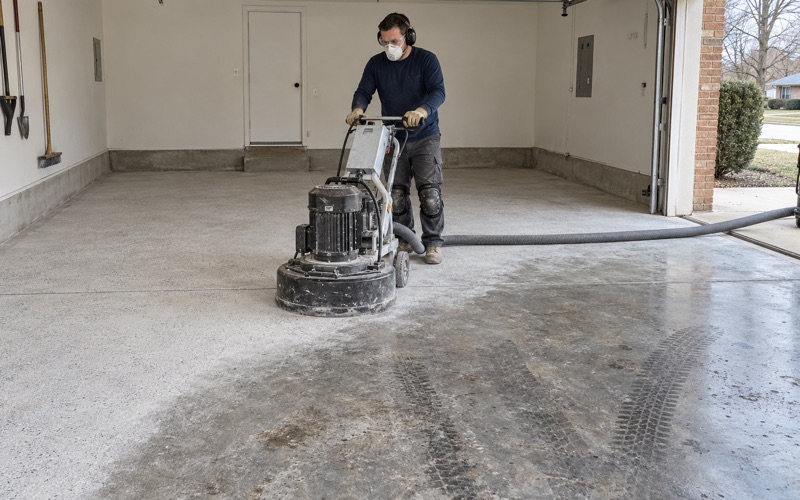
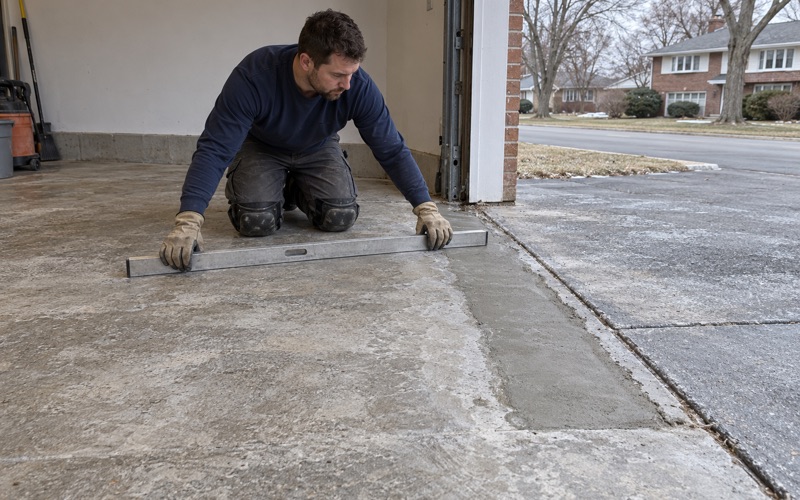
The installation half starts with the concrete itself. We open every slab with a diamond grinder or a shot blaster rather than an acid etch, map cracks, spalls and old coatings before pricing, and run a moisture test as a line item in the written scope. Our proposal names the product line, the coat count and the finished thickness, so a facility manager can hold the finished floor up against the paper.
The second half is a short set of handling rules and an inspection routine, written for the people driving the forklifts. We would rather hand those over at the walkthrough than explain a year later why a new floor carries long scars down the middle of the aisle.
A Forwarder’s Warehouse on Soreng Avenue
Schiller Park is a village in Leyden Township, Cook County, with 11,709 residents at the 2020 census, and it sits beside O’Hare with the Tri-State Tollway and the Canadian National rail yard running through its commercial life. Commercial property makes up 55 percent of the village’s equalized assessed value, which is why a place of 2.77 square miles keeps a real market for industrial and warehouse floors. Much of that work is freight.
What one branch warehouse holds
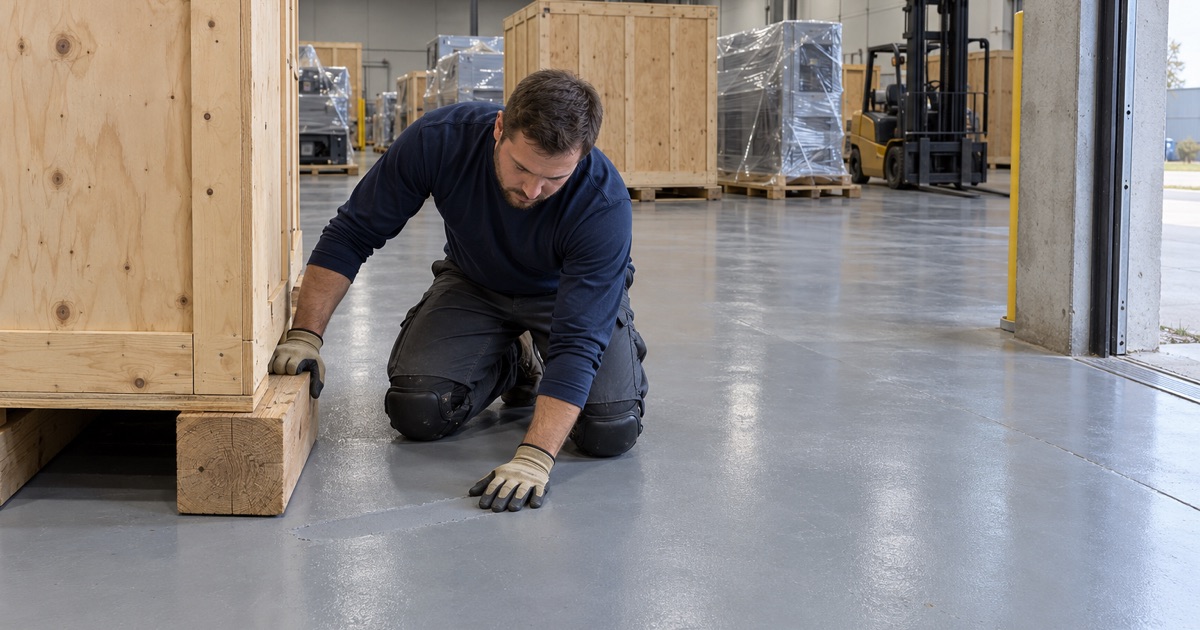
Fujitrans U.S.A., a freight forwarder, customs broker and project cargo company founded in 1981, lists its Chicago Branch at 9555 Soreng Avenue in Schiller Park. A March 2023 company presentation describes that branch as a warehouse of about 39,860 square feet, including 2,109 square feet of office, with 12 docks, a drive-in door on the northwest side, two 5,000-pound forklifts and one 10,000-pound forklift. The branch photo shows wooden crates and plastic-wrapped machinery sitting on pallets on the warehouse floor.
We have no relationship with Fujitrans and have not seen how its crews handle freight or what finish its floor carries. We use the published description because it is a clear public picture of a kind of floor this village has plenty of. Those figures are from 2023, not a current count.
Why project cargo is a different kind of freight
The same presentation describes a project business covering machine installation, dismantling and related service. That is not uniform cartons on standard pallets. It is crated machines, skidded frames and odd-shaped loads that arrive one at a time and rarely sit square to the aisle on the first try.
Looking for epoxy-flooring closer to Lake Forest? See Epoxy-Flooring in Lake Forest.
Crates, Skids and Big Forklifts: Where Floors Get Hurt
A crated-freight floor is worked by the crate. Timber skids carry nail heads and steel banding, a heavy load often needs nudging an inch or two into position, and a forklift rated for 10,000 pounds is a tempting tool for pushing a crate rather than picking it up. None of that is unusual, and all of it lands on the coating.
What the coating maker’s own guide lists
Hempel’s floor coating preventive maintenance guide names the causes of damage it sees, and they read like a description of a freight dock. Among them are dragging heavy, pointed metal or concrete objects across the coating, gouges from extreme impact, failing to repair damaged areas in a timely manner, and dragging pallets rather than lifting and moving them. Its do-and-don’t list adds that heavy equipment, drums and wooden pallets should not be slid or dragged across the floor without protection.
That guide is one manufacturer’s maintenance advice, not a code and not a legal requirement. We treat it as the floor’s house rules because it comes from the people who formulate the resin, and because it matches what we see on damaged floors when we are called back to them.
What dragging actually does to a coated floor
A pallet or skid pushed across a coating does not wear it evenly. A protruding nail, a loose band end or a steel foot plows a groove, and the groove fills with grit that the next drag grinds deeper. Once a gouge reaches the base coat or the concrete, water, oil and dirt can work under the edge and the damage starts to grow sideways.
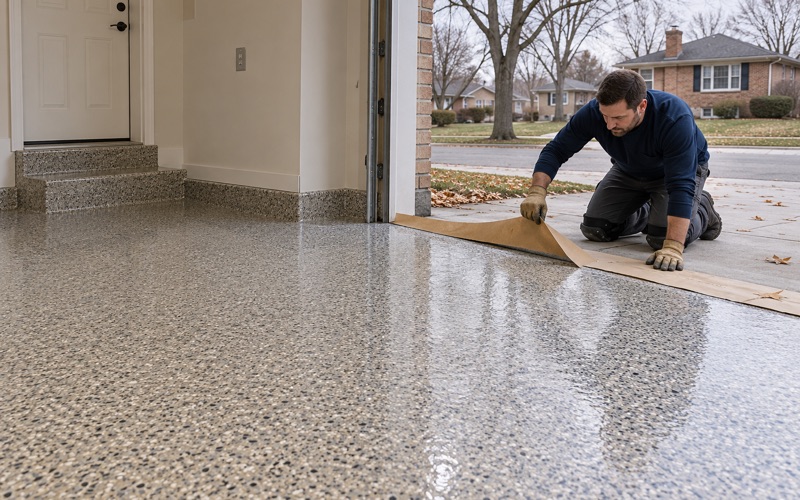
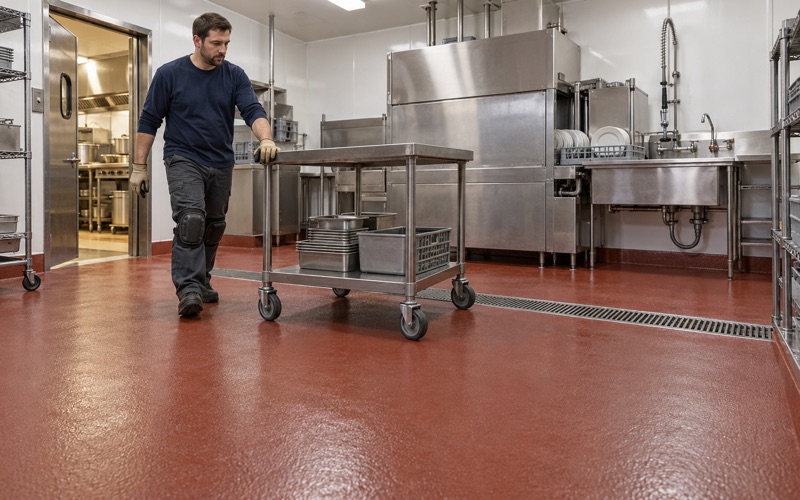
That is why we size the system for the work. On a crated-freight floor we typically talk through a high-build 100% solids epoxy body coat, often with a quartz aggregate broadcast for wear and texture, finished with a topcoat chosen for abrasion resistance. A thicker, harder film resists a careless push better than a thin roll coat, but no coating on the market is made to be plowed by a nail head, and we say so before the job is sold.
Lift and Set Down: The House Rule on a Crated-Freight Floor
The simplest rule we leave with a freight customer fits on a placard by the dock door. Loads are lifted, carried and set down, never pushed or dragged across the coated floor, and that holds for crates, skids, drums and pallets alike. It is the one habit that most changes how long the floor lasts.
Turning the rule into crew habits
In practice that means forks fully under a load before it moves, no forklift used as a bulldozer to square a crate against a wall, and a pallet jack or proper lifting gear for the last few inches of positioning instead of a pry bar and a shove. Where a load truly has to slide, the guide’s own wording points to protection between the load and the floor, such as plywood or a sacrificial sheet laid down first. We go over these points with the warehouse lead at handover rather than leaving them buried in a binder.
Matching the finish to the work
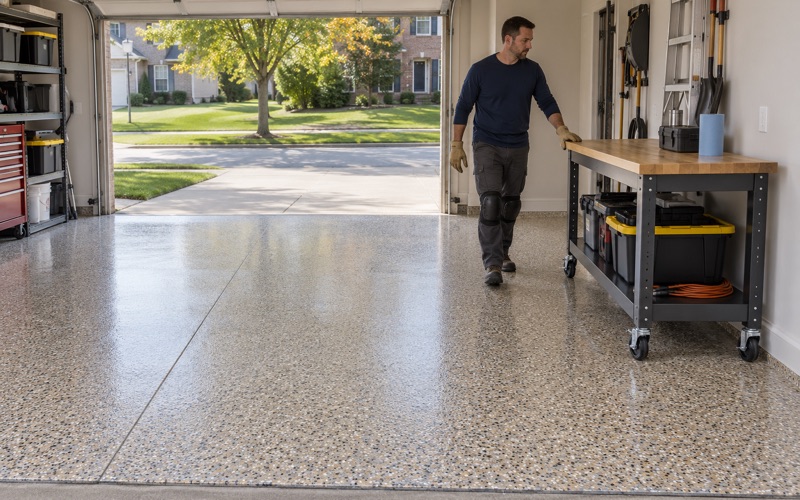
We also choose a topcoat color and texture that can be repaired. On a floor that will take the occasional gouge however careful the crew is, a patch should blend in rather than stand out as a bright new square. A quartz broadcast texture under a solid-color topcoat touches up far more cleanly than a high-gloss, perfectly smooth finish.
Slip resistance on a dock apron or a ramp is set the same way, by the broadcast and topcoat we specify, not by a promise. And because grinding dust from prep is caught at the machine with a vacuum, nothing gets rinsed toward a floor drain or a storm inlet, which matters in a village where Crystal Creek runs through town to the Des Plaines River.
Inspections on a Schedule and Gouges Repaired Before They Spread
The Hempel guide says the building owner should set up a semiannual floor inspection, with heavily used areas checked more often. On a freight floor the heavily used areas are easy to name: the dock plates, the turn in front of the drive-in door, and the lanes where the largest forklift travels loaded. We mark those on a floor plan at handover so the inspection has a route.
What an inspection looks for
A useful inspection is a slow walk with good light and a short checklist. The walker looks for gouges and scratches through the topcoat, chips at joint edges, any spot where the coating has lifted, and stains or dark lines that suggest liquid is getting under a damaged edge. Each find gets a photo, a location on the plan and a date, so the next walk can tell whether it is growing.
Repairing gouges promptly
The guide’s instruction is to repair gouges and scratches as soon as possible, and that is the cheapest advice in the whole maintenance plan. A fresh gouge is a small, contained repair: we grind the edges back to sound coating, fill the void with a compatible material, then blend and topcoat it. The guide notes that a new finish coat may be needed after repairs, and on a busy aisle that often means recoating a section rather than only dabbing the patch.
Left alone, the same gouge collects grit, takes on water and lets the edge lift a little more every time a load crosses it. A patch that would have taken a morning becomes a section of floor ground back to bare concrete. We schedule repairs and topcoat refreshes for weekends or overnight windows, so the docks keep working.
Work in the village itself
Any contractor working in Schiller Park needs a village license before construction starts, registered through the Community Core app with scope, cost, insurance, bond and workers’ compensation as applicable, and the license year runs May 1 to April 30. Building permits and inspections go through the Village of Schiller Park Community Development Department. We confirm those requirements before a job is scheduled, so a dock shutdown is never extended by paperwork.
- 20+ Years on Concrete
- Moisture Test in Every Scope
- Free Written Estimates