Glenview Epoxy Flooring has spent more than 20 years on epoxy flooring in Summit and across the Chicago area, and some of the floors that ask the most of us are the small ones where two-part paint gets mixed. A mixing bench is a few square feet of floor that collects drips of hardener, reducer and clearcoat every working day. Planning that patch of floor well matters more than the color chip on the rest of the room.
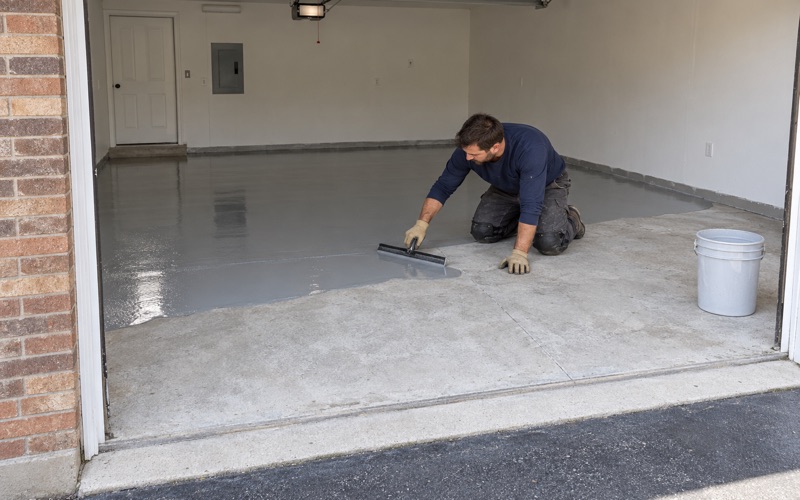
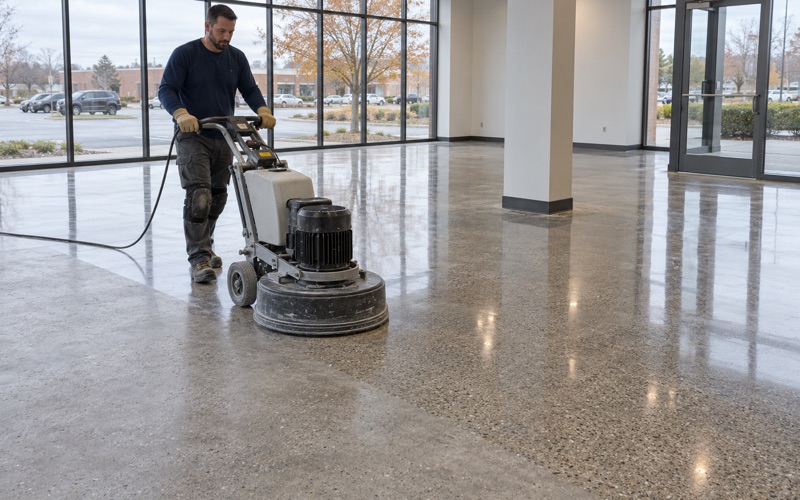
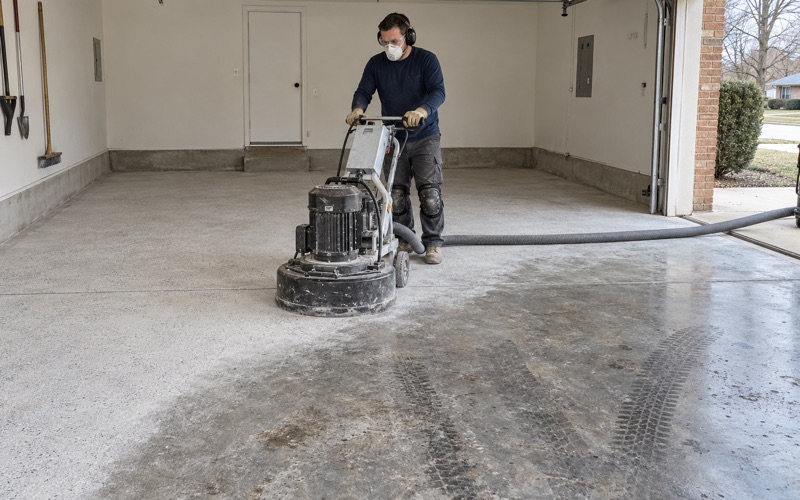
We start every job the same way, whatever the room is used for. The slab is opened with a diamond grinder or a shot blaster, never an acid etch, so the coating gets a measurable profile to hold. A moisture test goes into the written scope before the price is final, and the proposal names the product line, the coat count and the finished thickness so the result can be checked against what was quoted.
What follows is how we think about a floor that sits next to isocyanate products, from a supply counter to a home garage. It is written for shop owners, landlords and homeowners deciding what a coated floor can and cannot do.
An Auto-Paint Supplier on West 60th Street and What It Stocks
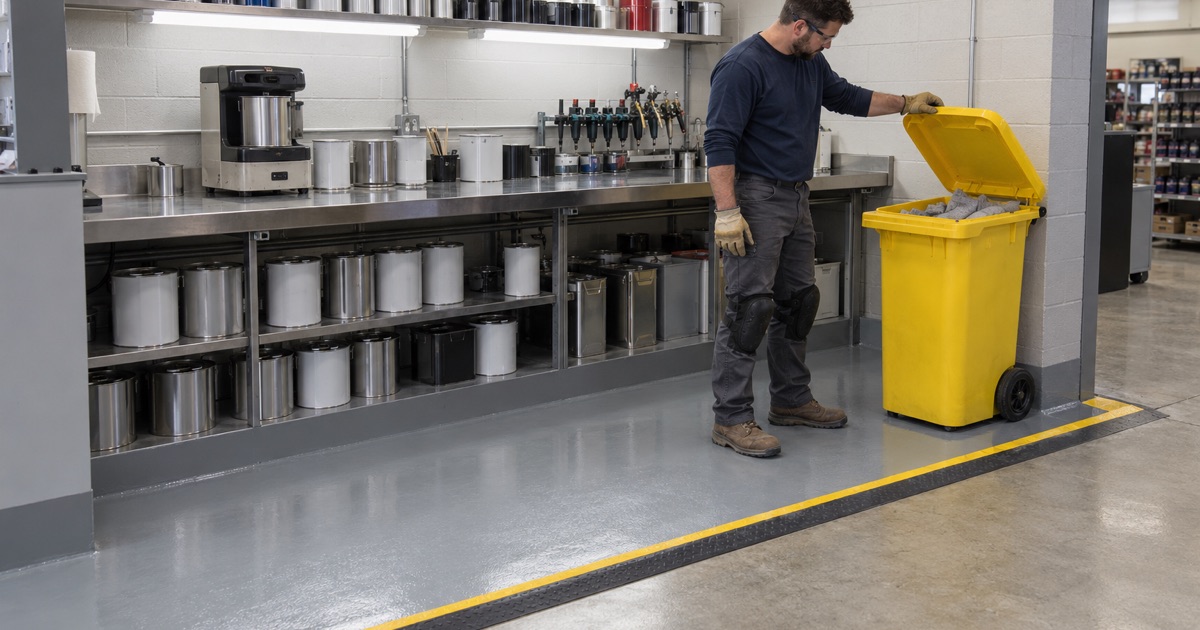
Summit has a working auto-paint trade, and one of its fixed points is Bud’s Body Shop Supply & Paint at 7752 W. 60th St. The business describes itself as serving professionals in Summit since 1985, and SEM Products lists it as a distributor. We have no relationship with the store and have not seen its floor, but the kind of product that moves across a counter like that one is worth understanding before anyone coats a mixing room.
The activator is the part a floor has to plan for
Paint and primer get the attention, but the product with the biggest consequences for a floor is the clearcoat activator. SEM’s safety data sheet for its 50762 Euro Activator lists an HDI prepolymer at 30 to 40 percent, carried in heptan-2-one and other ketone solvents. That prepolymer is an isocyanate, the reactive half of a two-component urethane, and it is what makes the clearcoat cure hard.
Why the label reads the way it does
The same sheet carries the signal word Danger and the hazard statement H334: “May cause allergy or asthma symptoms or breathing difficulties if inhaled.” In plain terms the maker labels the hardener a respiratory sensitizer, which means exposure can leave a person reacting to amounts that did not bother them before. It also lists the product as a flammable liquid and a skin sensitizer.
That is one maker’s hardener, and we have not read what any Summit counter mixes. Still, most 2K clearcoat activators share the same basic chemistry, and a floor near them should be planned around the cleanup the label calls for rather than around how the finish looks on day one.
Looking for epoxy-flooring closer to Wauconda? See Epoxy-Flooring Services in Wauconda.
Absorb, Collect, Vent: Cleaning Up a Hardener Spill
Section 6 of the SEM sheet is short and direct. It says “Do not allow to enter sewers/ surface or ground water,” and it says to absorb a spill with liquid-binding material such as sand, diatomite, acid binders, universal binders or sawdust. It also says to ensure adequate ventilation while doing it.
A mop and a hose are the wrong tools
That instruction rules out the cleanup habit most shops fall into. Mopping an activator spill spreads it across a wider area and leaves solvent in the mop head, and hosing it sends it toward a floor drain, which is exactly where the maker says to keep it out of. In Summit the stakes go up, because the village’s own 2024 hazard mitigation annex says sewer and rainwater are combined into one sewer.
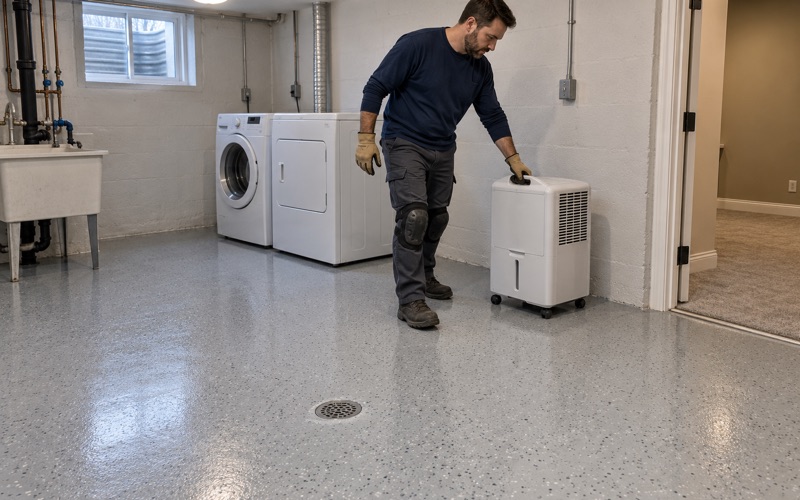
So the floor plan in a mixing area starts with what is kept within arm’s reach. A bin of dry absorbent, a scoop and a lidded container belong beside the bench, and the floor around it should have no drain that a spill could reach before it is covered.
Why the waste is not sealed right away
Isocyanate reacts with moisture and gives off carbon dioxide as it does. An Axalta activator sheet adds that waste from an isocyanate spill should not be sealed for 48 hours so that gas can vent. A tightly capped pail of fresh absorbent can build pressure, so collected waste sits in a loosely covered container in a ventilated spot before it is closed.
What the floor contributes
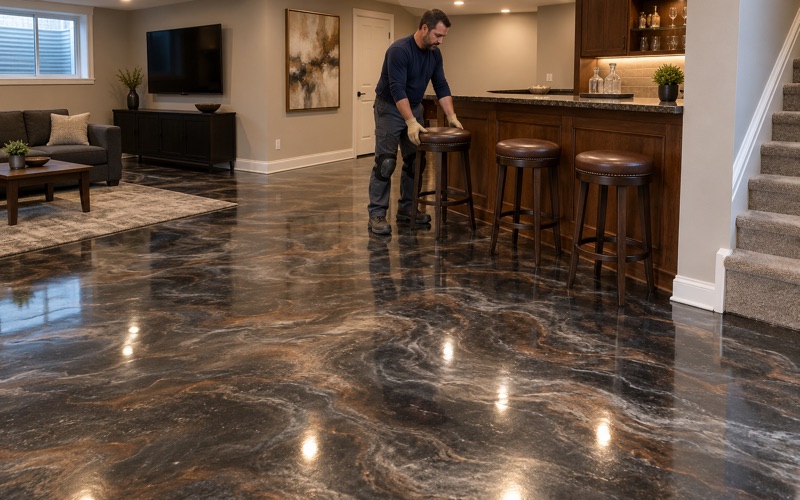
A coated floor makes this routine work. Absorbent sweeps up cleanly from a smooth, sealed surface and leaves nothing behind in pores or joints. On bare concrete, a drip of solvent-borne hardener soaks in, keeps releasing vapor, and cannot be absorbed back out of the slab.
A Sealed Mixing Zone Apart From Customer Traffic
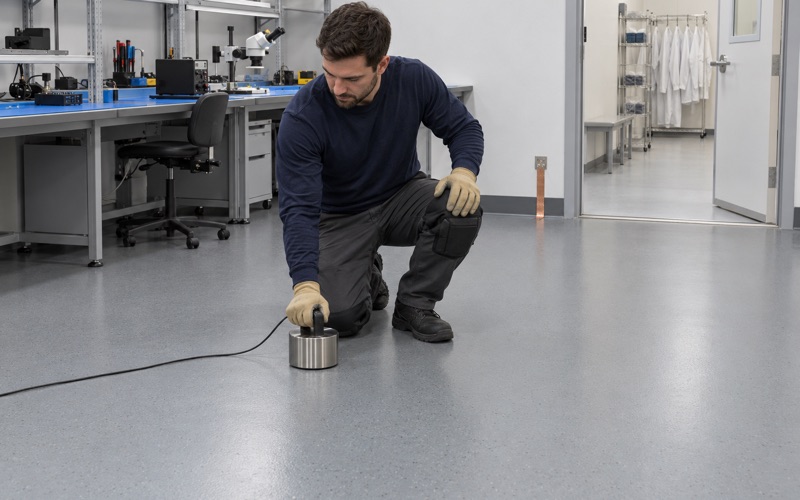
The practical answer for a paint counter or a body shop mixing room is a defined zone. The mixing bench sits on its own seamless, coated area, kept apart from the aisle where customers walk and set down product. Mats or trays at the scale catch the drips that happen during every pour.
Seamless is the point
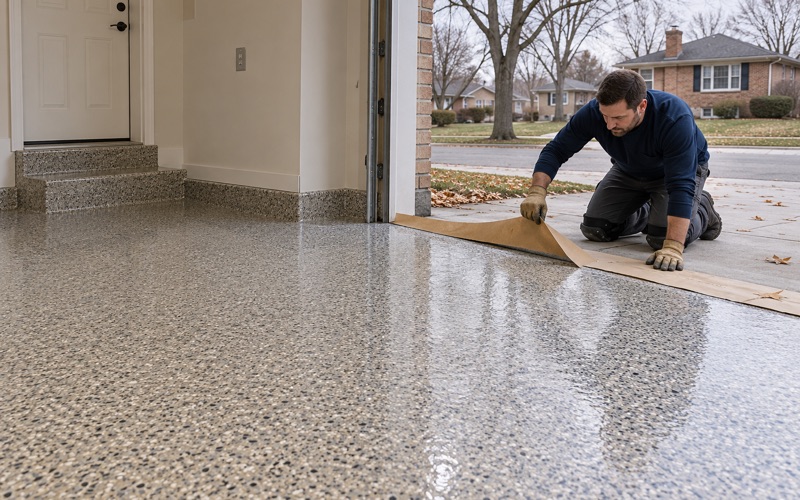
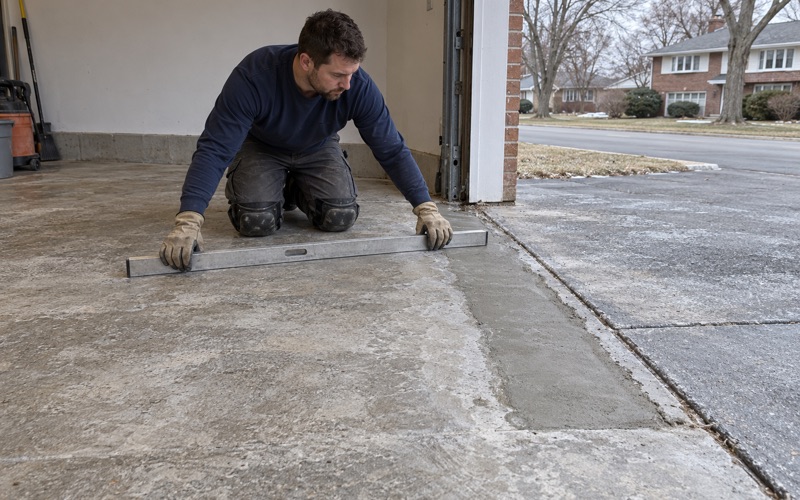
A seam, a saw cut or an open crack is where a spill gets under a coating and stays there. We map cracks, spalls and old coatings before we price the job, and we say so when a slab needs repair or replacement before it should be coated. Control joints inside the mixing zone are filled and coated over so the area reads as one continuous surface that absorbent can be pushed across.
What a coating will not do
No coating makes a floor immune to solvents or hardeners, and we do not sell one that way. A 100% solids epoxy base with a chemically resistant topcoat stands up well to drips that are cleaned up promptly, but a puddle left for days can soften or stain any resin. The value of a sealed zone is that it keeps a spill on top, where it can be absorbed and collected, rather than inside the slab.
Prep that the zone depends on
A mixing area is usually a corner of an older slab. Summit’s buildings are mostly existing stock, with only 46 housing units added in the 1980s and 105 in the 1990s, so the work here is on concrete that has already lived a life. That is why the moisture test and the profile from grinding come first, and why grinding dust is captured at the machine with a vacuum instead of being washed toward the same drains the spill plan is protecting.
Confirming the town before the permit desk
A commercial address that reads Summit or Summit Argo is not always inside the village. The line with Bedford Park runs along Archer Road itself, and a mailing address can sit on either side of it. We geocode a commercial job before assuming which building department will review it, then check permit and code questions with the Village of Summit Building and Public Works department at 7321 W. 59th Street before the work is scheduled.
The Summit Fire Department, a village department next door at 7339 W. 59th Street, handles fire prevention. Where flammable finishing products are stored or mixed, we leave those storage and room questions to the owner and the authorities who rule on them. Our part is the floor, and we keep it to what a coating can honestly do.
Two-Part Urethane Topcoats Are the Same Chemistry
There is a twist in coating a mixing room. Many durable floor topcoats are two-component urethanes or polyaspartics, and some of those use the same family of isocyanate hardeners as the clearcoat on the bench. A floor installed to manage an isocyanate spill can itself be an isocyanate product while it goes down.
Closed to traffic and ventilated during install
We treat our own topcoat the way the paint label treats its activator. The room is closed to customers and staff while the coating is mixed, applied and early in its cure, and air is moved out of the space rather than recirculated into a showroom or office. For a counter that stays open during business hours, that usually means an overnight or weekend window, phased so one area is worked while another stays in use.
Cure follows the slab, not the calendar
Urethane and epoxy cure on slab temperature and the dew point spread at the surface. We schedule the topcoat around those readings, and an unheated building in deep winter is told to wait rather than handed a floor that blushes or stays soft. The products we choose sit inside the Illinois VOC limits for floor and industrial maintenance coatings, which bind whoever applies them.
The same rules in a Summit home garage
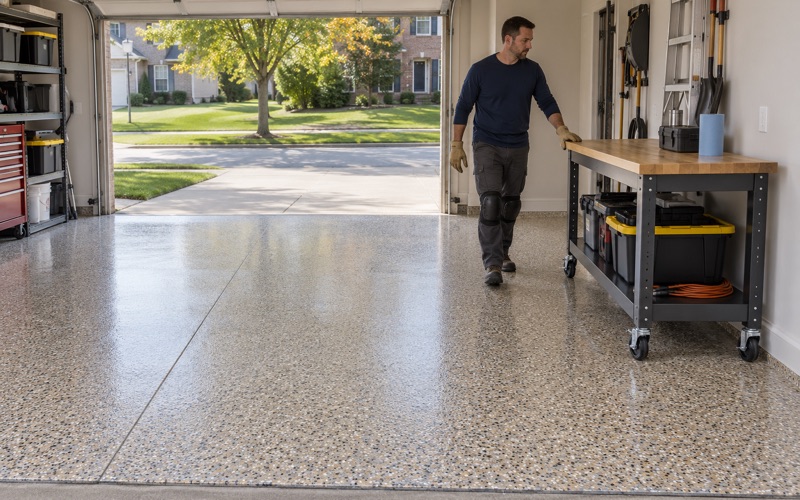
A home mechanic who sprays a fender or touches up a bumper with a 2K kit in an attached garage is handling the same kind of hardener on a smaller scale. A spill is covered with dry absorbent and scooped into an open container, never rinsed toward a floor drain on the combined sewer. A sealed, seamless garage floor makes that cleanup quick, and we explain before the job is sold what the coating warranty leaves out, with moisture named first.
If you are planning a mixing area, a body shop floor or a garage in Summit, we will walk the slab, test it for moisture and put the system, coat count and thickness in writing before any grinding starts.
- 20+ Years on Concrete
- Moisture Test in Every Scope
- Free Written Estimates