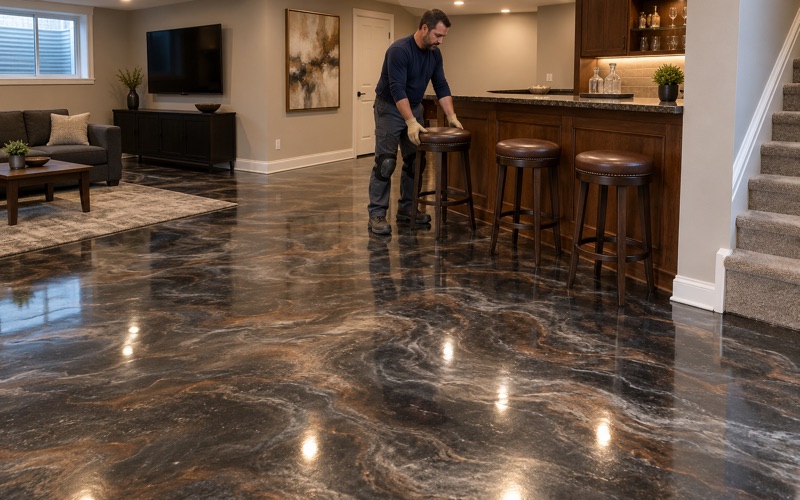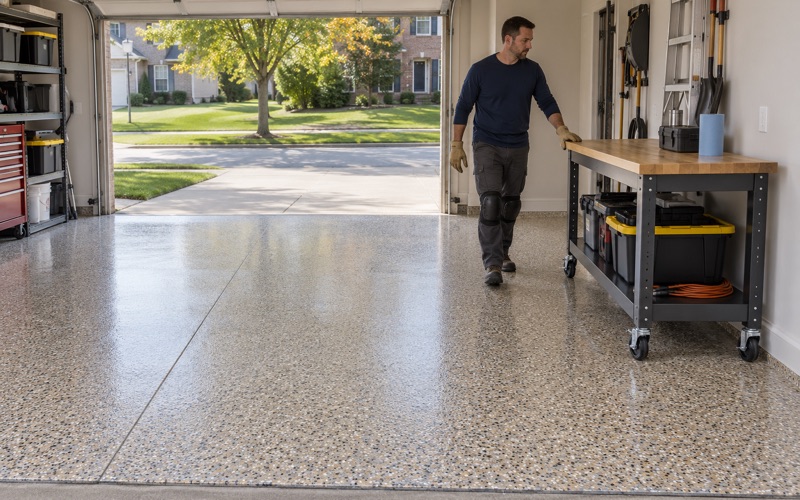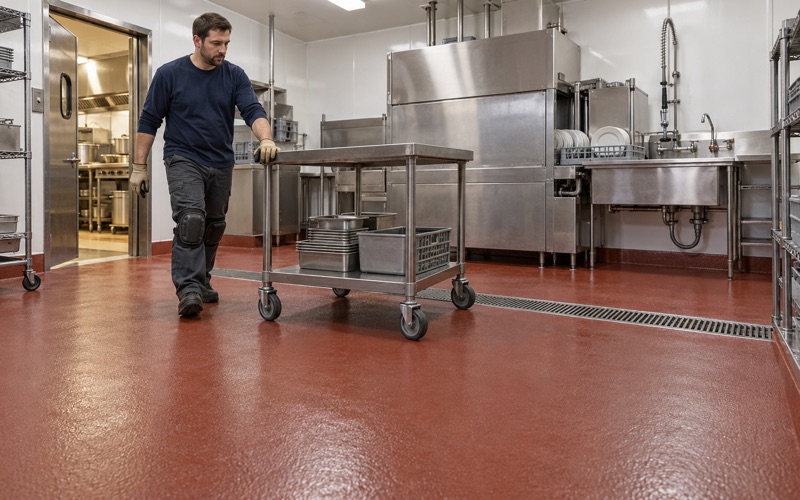
Glenview Epoxy Flooring has put more than 20 years into epoxy flooring in Winfield and the communities around our home base, and the floors that teach us the most are the ones children use. A classroom floor takes spilled paint, tipped water tables, dropped snacks and a daily mopping, and it has to come back clean every time. A seamless resin surface with no grout lines gives that mess nowhere to settle.
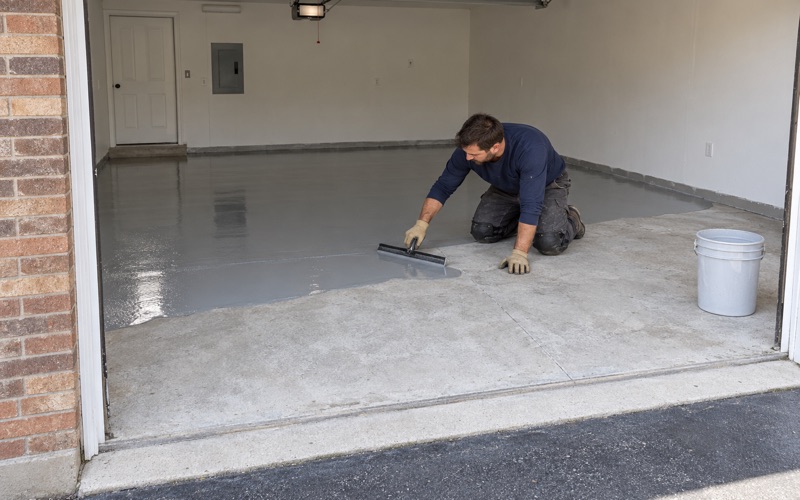
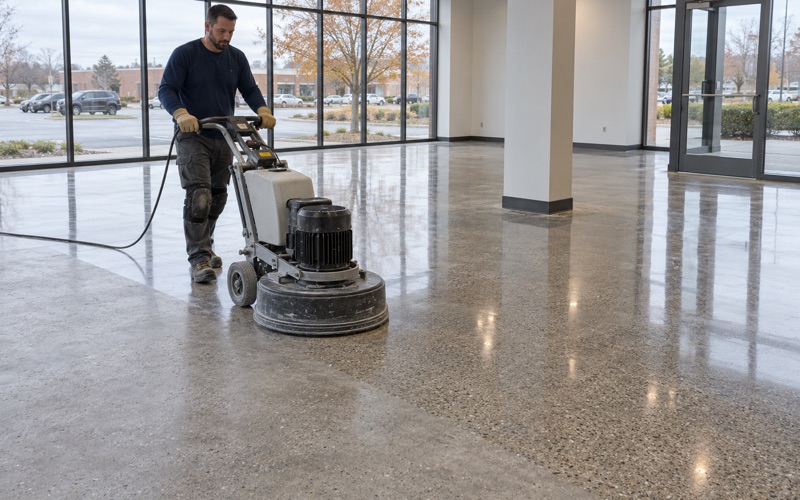
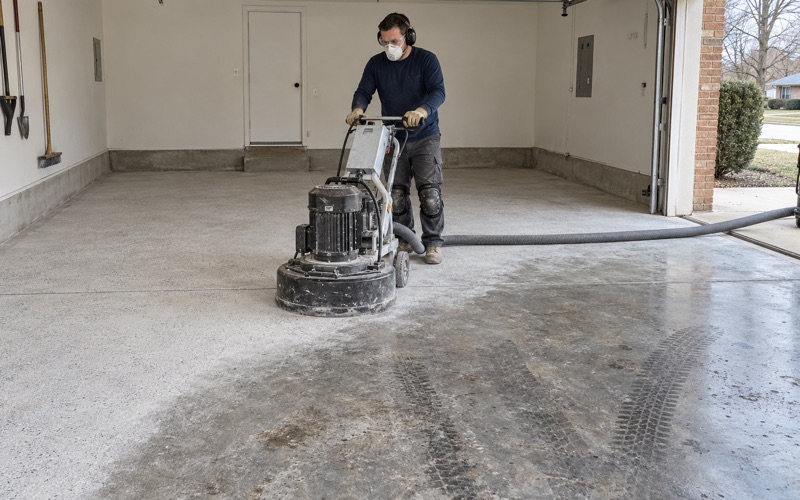
We work in commercial suites and in homes, and the method is the same in both. Every slab is opened mechanically with a diamond grinder or a shot blaster rather than etched with acid, and a moisture test sits in the written scope before we settle on a price. The proposal names the product line, the coat count and the finished thickness, so you can hold the finished floor up against what you were quoted.
This page walks through where resin belongs in a child care room, where it does not, and why the slab underneath gets tested before anything goes down. The same thinking carries over to the playrooms and craft spaces in local homes. None of it starts until we know what the concrete underneath is doing.
Licensed Child Care on Winfield Road and the Illinois Floor Rules
Primrose School of Winfield runs licensed child care at 0N040 Winfield Road, Suite 100, serving children from infants through transitional kindergarten. It is open Monday through Friday from 6:45 a.m. to 5:45 p.m., right down the road from Winfield Primary School and Northwestern Medicine Central DuPage Hospital. We mention it as a local example of the kind of building this page is about, not as a client, and we have not seen its rooms or its floors.
What the building standards say
The Illinois licensing standards for day care centers, 89 Ill. Adm. Code 407.370, include a section on building and equipment that speaks directly to floors. Subsection (e)(2) says the floors and floor coverings shall be washable and free from drafts, splinters, and dampness. That is one sentence, but it reaches every surface in a center, from the infant room to the hallway.
Subsection (d)(5) deals with sound. Any room or space accommodating more than one group needs an acoustical ceiling or its equivalent in carpeting or wall covering. If carpet is the answer to noise, the rule adds, it shall not be required in water play, painting, and similar areas.
What the rule does not say
Nowhere does the rule call for epoxy, resin or any named product. It sets a performance standard instead: washable, dry, no splinters, no drafts. Many floor types can meet it, and we would rather explain why a seamless coating suits certain zones than pretend the state asked for one.
We hold no child care license or certification of any kind, and nothing we install carries a licensing approval. Questions about how a licensing reviewer reads the standard belong with the state agency, not with a flooring contractor. Our part is building a floor that stays washable and dry for as long as the room is in use.
Looking for epoxy-flooring closer to Round Lake? See Epoxy-Flooring in Round Lake.
Carpet for Sound, Resin for Water Play and Painting
Read together, the two subsections split a shared classroom into zones. Carpet can do acoustic work on a reading rug or in the block corner, but the rule carves out the wet places, where carpet soaks up water and paint and never fully dries. That carve-out is exactly where a resin floor earns its spot.
Which zones suit a seamless floor
Water tables, easels, sensory bins and eating areas all put liquid on the floor several times a day. Diapering and toilet rooms see the same, and although the section we read sets no floor material for them, the washable-and-dry requirement covers every floor in the building. A 100% solids epoxy base under a polyaspartic or polyurea topcoat makes one continuous surface a mop can actually clean, with no seams for paint to work into.
Where the resin stops
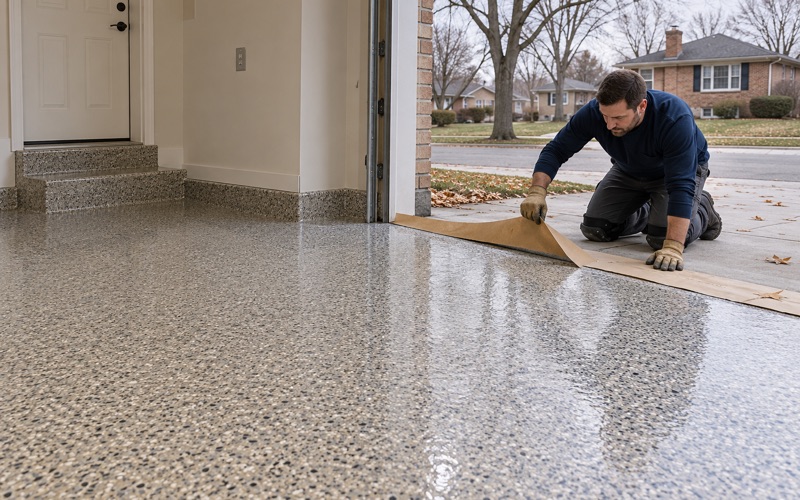
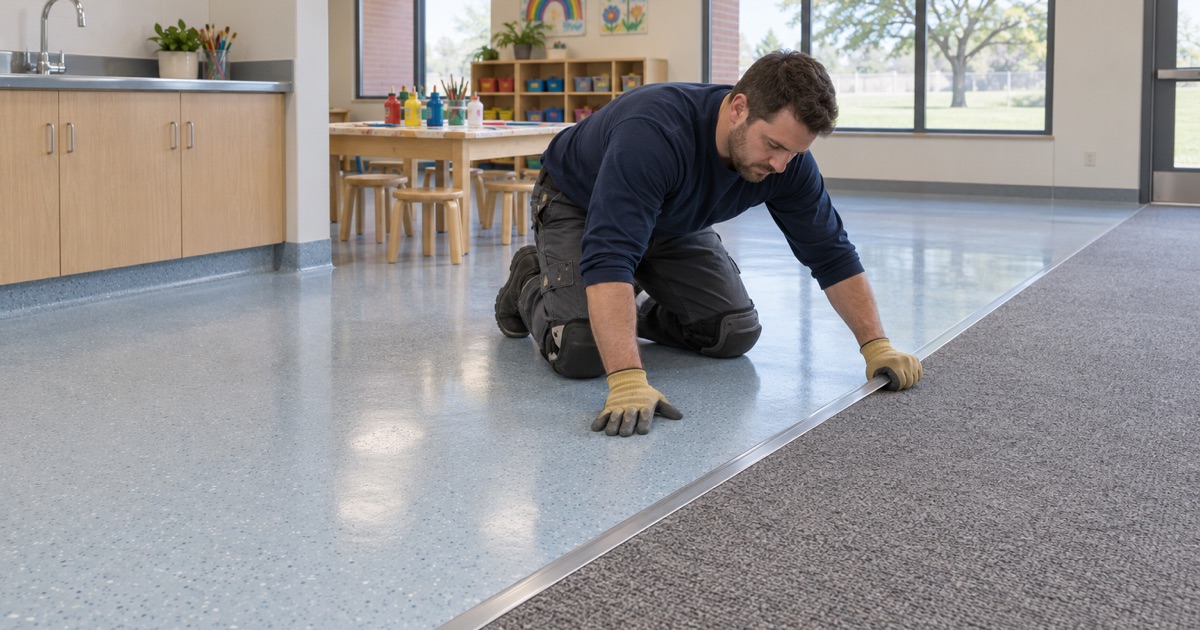
The joint between a coated zone and a carpeted one deserves as much planning as the coating itself. We lay out the resin edge on a straight, deliberate line, finish it cleanly at the transition, and keep the two surfaces level so the carpet edge does not become a lip. A ragged termination is where water creeps under carpet backing and where a coating begins to lift.
We also plan the line around how the room is used, not just where the furniture sits today. An easel that moves two feet can put wet paint on carpet, so the coated zone should be sized for the activity rather than the current layout. Teachers usually know where the mess really lands, and we ask them before we mark anything.
Texture and cleaning
A slip-resistant finish is built from the broadcast and the topcoat, such as a quartz aggregate or a fine additive in the final coat, rather than promised as a slogan. Wet zones that get mopped often want enough texture to help underfoot without becoming hard to wipe down. We bring samples, because the balance between grip and cleanability is easier to judge by hand than by description.
‘Free From Dampness’: Testing the Slab Under a Child Care Suite
Many child care suites sit on ground-floor slabs, and that is where the dampness clause matters most to us. A sealed resin floor over a slab pushing moisture vapor up from below can blister, lose its bond or hold dampness right where the rule says there should be none. On a ground-floor suite, the moisture test comes first, before color charts or schedules.
How we test
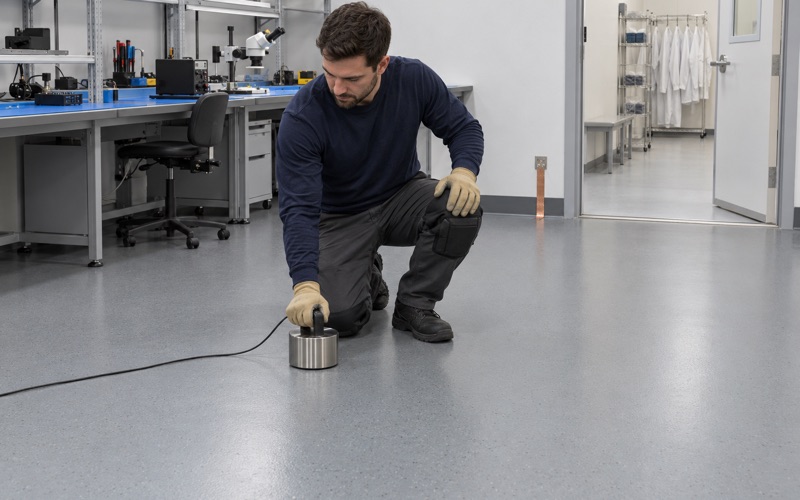
We use ASTM F2170 in-situ relative humidity probes set into the slab and, where the job calls for it, ASTM F1869 calcium chloride testing for the vapor emission rate. A quick ASTM D4263 plastic sheet test can flag an obvious problem, but it is a screen, not a measurement we would build a scope on. Readings are compared against the product maker’s limits and ASTM F710 guidance before the price is final. Probes need time to settle in the concrete, so the test is scheduled ahead of the quote rather than squeezed in on install day.
When the readings come back high
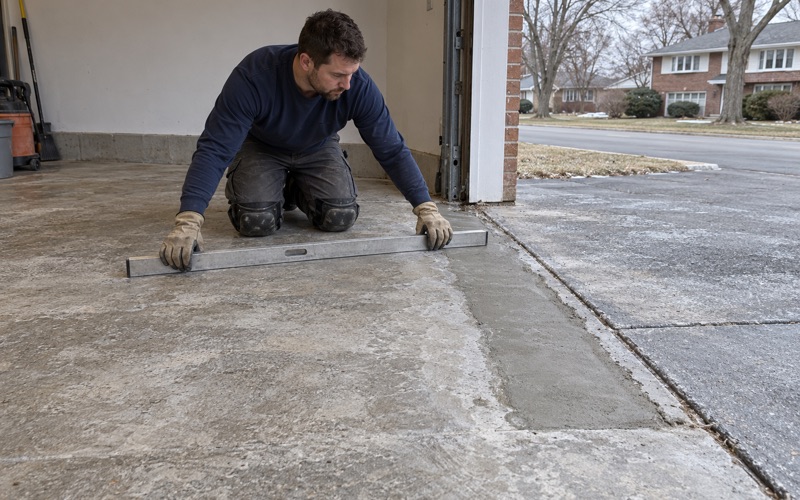
A high reading does not always end the job. A moisture-mitigation primer can be specified under the system, and we will say so plainly in the proposal along with what the coating warranty still excludes, with moisture vapor transmission named first. If the slab also has cracks, spalls or an old coating, we map those before quoting and tell you when repair should come before any resin.
Working around the school day
A center that opens early and closes in the evening rarely has a long stretch to shut a room. We phase the work by zone and use overnight and weekend windows so the classrooms not being coated stay usable. Cure timing follows slab temperature and the dew point spread at the surface, and grinding dust is pulled into a vacuum at the machine rather than drifting into the next room.
Playrooms and Art Corners in Winfield Homes
The same reasoning scales down to a house. Winfield is a village of homeowners, with 3,695 of its 4,019 occupied units owned by the people living in them, and when a lower-level room becomes the playroom it inherits the classroom’s problems. Paint, slime, play dough and juice boxes do the same thing to a home floor that they do in a center.
Basement playrooms
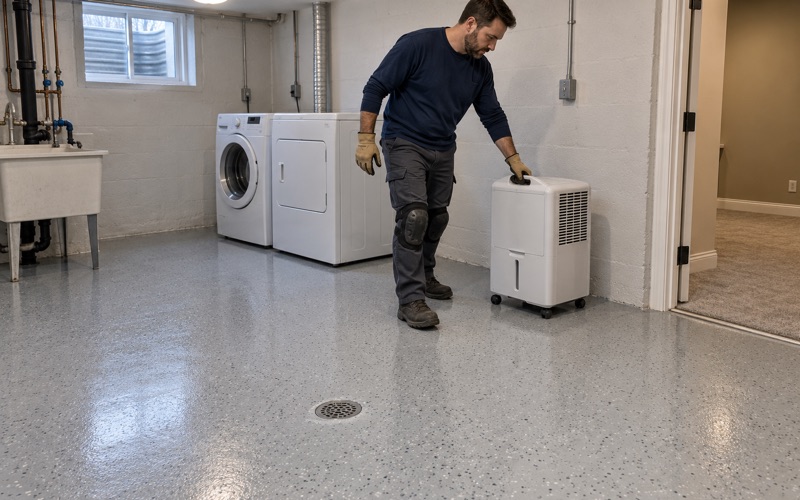
A basement playroom is read for past water before anything else, because a coating does not stop seepage or a sewer backup. We look for staining, efflorescence and the history of any sump pit, then test the slab the same way we would in a commercial suite. The DuPage River runs through the village, but whether a particular lot has a water history is something the slab and the homeowner have to tell us.
Craft rooms and hobby spaces
Adults use these rooms too. A sewing, painting or model-building room benefits from a floor where a dropped brush or spilled glue wipes up instead of soaking in, and a vinyl flake or quartz broadcast hides minor wear while still scrubbing clean. We match the topcoat to what actually gets spilled in the room. Solvent-based craft materials and water-based paint ask different things of a finish, so we ask what the space is for before we choose a system.
Contracts, products and who to call
Home jobs over the state threshold get a written contract and the Home Repair: Know Your Consumer Rights pamphlet before any grinding starts, as the Illinois Home Repair and Remodeling Act calls for. Products are chosen inside the Illinois VOC limits for floor coatings, which bind whoever applies them, and we never present a coating as radon reduction, because in Illinois that is licensed mitigation work.
We check permit questions before a job is scheduled, not after. In Winfield those go to the Village of Winfield Building Department at 27W465 Jewell Road, while fire code questions belong to the Winfield Fire Protection District, a separate special district rather than a village office. On a DuPage County commercial suite, we confirm both before the first grinder arrives.
- 20+ Years on Concrete
- Moisture Test in Every Scope
- Free Written Estimates